The American Civil War Museum
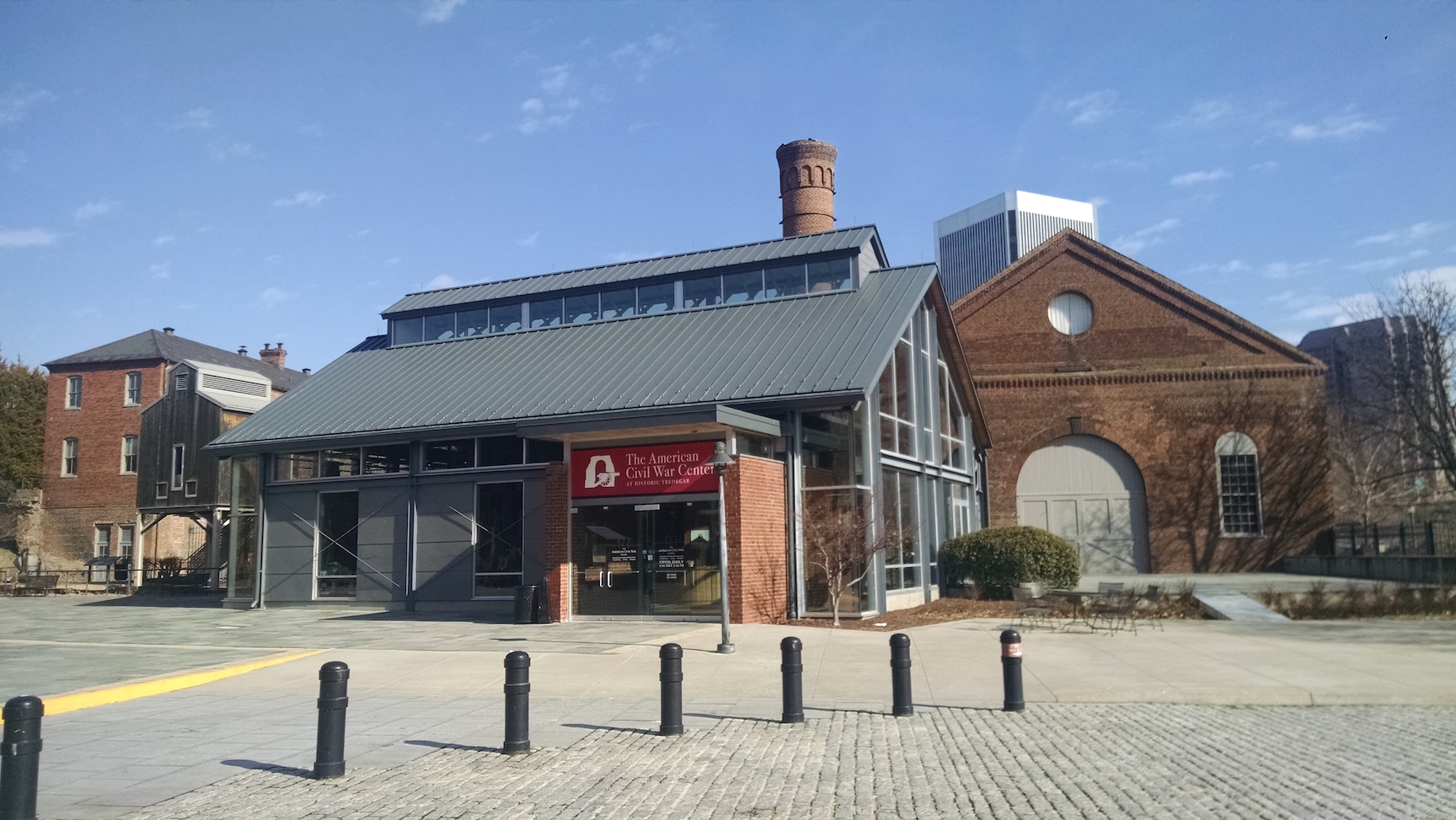
Museum on the Civil War and Reconstruction, located on the site of the Tredegar Iron Works, where the cannon fired at Fort Sumter were made
Site Details
Pin location is approximate.
480 Tredegar St
Richmond, VA 23219
Family Friendly?
Yes
Visitors Per Year
50,000
The American Civil War Museum at Tredegar features a 20-minute welcome film, a main exhibit, a special exhibit, a featured daily lecture on the history of Tredegar Iron Works, and a daily rifle shooting. The main exhibit boasts a wealth of artifacts, including original hand-drawn maps from the Civil War and detailed historical analysis of the war as a whole and individual battles in the war. In terms of narrative, the exhibit guides visitors through the history of the war and explores the social, economic, and political effects of the war on all involved.
For groups of 15 or more, a guided tour can be requested.
The main exhibit adheres to traditional academic standards.
While the welcome film does pull content from historical documents, it overemphasizes the perspective of slaves and fails to maintain a balanced tone. It makes bold claims without supportive evidence, such as the claim that every single Confederate soldier fought for slavery and makes no mention of arguments over state rights or any effort to share additional historical context.
The special exhibit “The Impending Crisis” departs from academic standards by sharing short phrases and quotes with no in-depth historical analysis. Additionally, the panel leading into the exhibit states “In this exhibit you will encounter three groups: free and enslaved Black people, White northerners, and White pro-slavery southerners,” and fails to share the perspectives of any Americans outside of those three groups.
The main exhibit maintains a balanced tone and does not promote any underlying narrative (besides the end panels—see below). The exhibit features a range of perspectives from key figures in the Civil War, including Abraham Lincoln, Ulysses S. Grant, Robert E. Lee, Stonewall Jackson, various Union and Confederate soldiers, slaves, and civilians. However, at the end of the exhibit, a panel on “The Lost Cause” movement is featured next to a large painting of Lee and Jackson, insinuating that the two were behind the movement and stating that reverence for Lee and Jackson lay at the heart of the movement—though Lee publicly decried The Lost Cause. A KKK uniform is also displayed in the same section as the painting.
The welcome film is about 20 minutes long and disproportionately features the perspective of slaves. While Lincoln and Grant are both briefly quoted, no perspectives of soldiers, either Union or Confederate, are shared. The narrative suggests that all Confederate soldiers fought for slavery.
While the special exhibit does not promote an explicit agenda, the underlying narrative of the exhibit revolves completely around slavery and does not give adequate attention to other components of the Civil War crisis.
The daily lecture is purely factual and balanced.
While parts of the museum push an agenda, the main exhibit and the featured lecture are highly informative and would be enjoyable for the whole family—though, of course, the Civil War is a dark period in American history and may not be suitable for the youngest family members.
The bookstore features highly esteemed historical works on the Civil War and well-regarded biographies of key figures in the war, including Abraham Lincoln, Ulysses S. Grant, and Robert E. Lee. There appear to be no ideological books for children or adults in the bookstore.
The location of the museum is ideal for a day trip. It is also not far from the White House of the Confederacy, which is a sister site to The American Civil War Museum.
The American Civil War Museum sits on the site of Tredegar Iron Works on the James River. Tredegar Iron Works was the largest ironworks of the Confederacy during the Civil War, producing half of all Confederate cannon. Cannon made at Tredegar were fired in the first shots of the Civil War at Fort Sumter.
Prior to the Civil War, Tredegar Iron Works was the largest iron foundry in the United States. Joseph Reid Anderson, an American engineer and businessman, owned and operated Tredegar through the Civil War. Anderson served as a Confederate general until he resigned his commission to resume running Tredegar.
Tredegar Iron Works changed the landscape of enslaved labor. Originally, the cannon were built by highly technical—and highly paid—European craftsmen who came from Tredegar, Wales, the namesake of Tredegar Iron Works. However, upon taking over Tredegar Iron Works, Anderson let these craftsmen go and replaced them with slave labor to cut factory costs. These slaves went through training and became highly skilled workers in the ironworks.
The city of Richmond, where Tredegar Iron Works is located, was the capital of the Confederacy during the Civil War. The ironworks was one of the only buildings to survive the Union burning of Richmond in 1865, though it sustained serious damage to the arsenal.
Following the Civil War, Anderson obtained a pardon for himself and Tredegar from President Andrew Johnson and was able to restore his business. Tredegar Iron Works became one of the largest employers in the South and was critical to the Reconstruction period. While business began to slow in the late 19th century, Tredegar Iron Works remained in operation until 1957.
Owned By: The American Civil War Museum
Operated By: The American Civil War Museum
Government Funded: Yes
Did you know?
Tredegar Iron Works was the largest supplier of cannon to the Confederacy during the Civil War.
Recommended Reading
- Battle Cry of Freedom by James McPherson
- Lincoln by David Herbert Donald
- Robert E. Lee by James I. Robertson, Jr.
Reviewed By
Kevin Roberts, PhD
President of The Heritage Foundation
Emma Lagarde
Associate Writer at The Heritage Foundation
The opinions expressed above are those of the Reviewer who is providing a good-faith historical assessment to educate the public. Reasonable opinions can vary, and the Reviewer’s opinion is not necessarily the opinion of The Heritage Foundation or its affiliates.