Temple Square
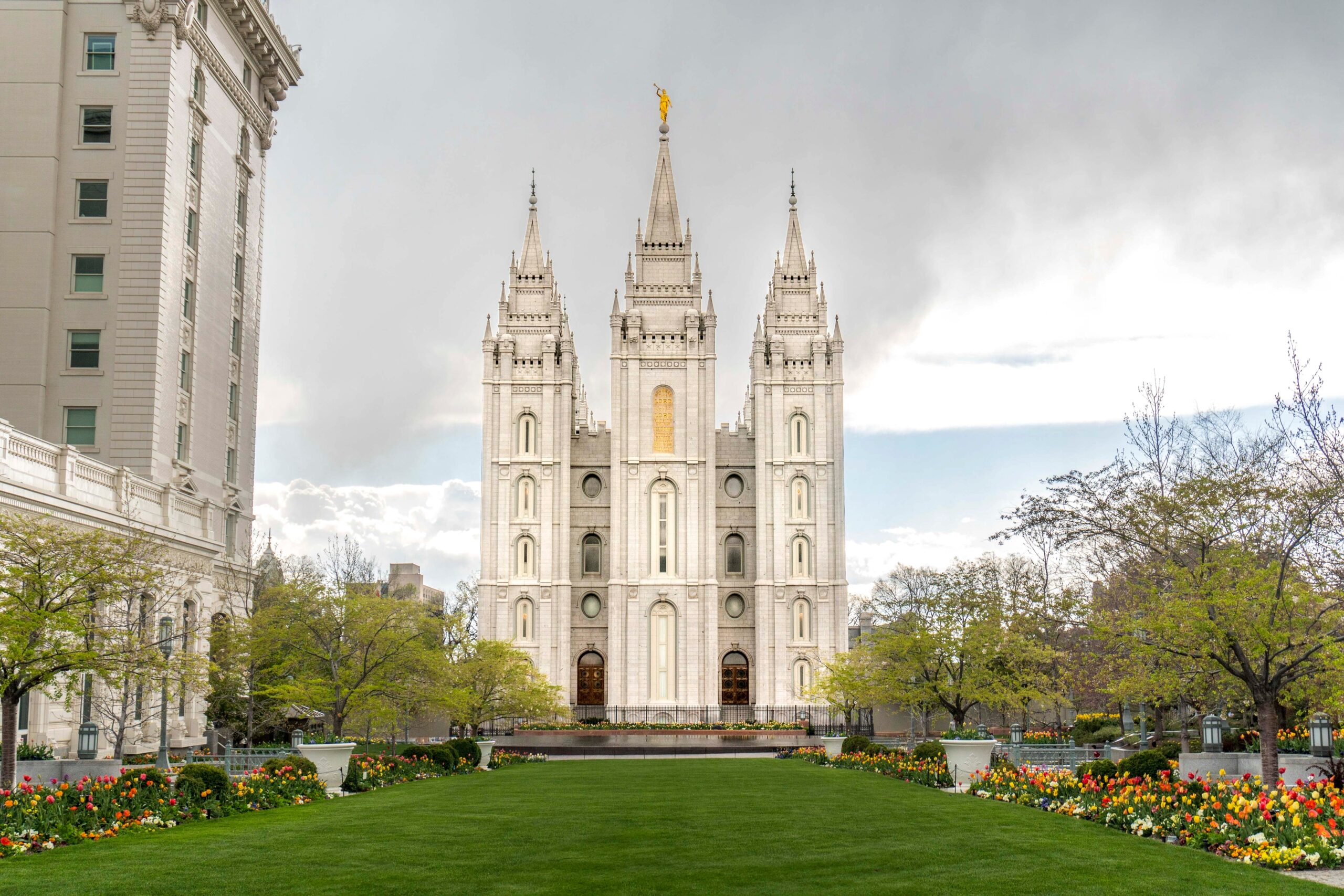
Historic center of The Church of Jesus Christ of Latter-day Saints in Salt Lake City, featuring the iconic Salt Lake Temple and serving as one of the most visited religious sites in the United States
Site Details
Pin location is approximate.
50 North Temple
Salt Lake City, UT 84150
Family Friendly?
Yes
Visitors Per Year
3,000,000
Temple Square includes a Church History Museum, a Church History Library, and a FamilySearchLibrary, but is not best understood as a museum in the academic or curatorial sense. It is known as the spiritual headquarters of the Church of Jesus Christ of Latter-day Saints and is an active worship space as well as a symbol of the church’s identity and a gathering place for members and non-members worldwide.
- Many of the exhibits highlight cooperation with humanitarian partners, women’s contributions to church leadership, and interfaith engagement.
- Temple Square offers several guided and self-guided experiences across multiple buildings, typically totaling 1.5–2 hours if a visitor sees the major sites.
- Tours are free, led primarily by sister missionaries, and can be offered in dozens of languages. The missionaries receive extensive training in answering a wide variety of questions from church politics to Utah history, westward migration, and religious liberty.
- General Grounds Tour (approx. 45–60 minutes). Guides introduce the origins of Temple Square, the pioneer migration west, and the construction of the Salt Lake Temple. They highlight the role of temples in Latter-day Saint belief, explain the symbolic elements in temple architecture, and help orient visitors to the site, which includes the Tabernacle Assembly Hall and Conference Center. The emphasis is on faith, perseverance, and religious liberty; controversial topics (such as polygamy, conflicts with the federal government, or the priesthood and race) are not part of the standard presentation but are not considered “off topic.”
- Tabernacle Visit & Organ Demonstration (20–30 minutes). Guests learn about pioneer engineering and acoustics inside the 1867 Tabernacle and may experience a short, live organ recital featuring one of the largest and oldest organs in continual use in the United States.
- Conference Center Tour (45–60 minutes). Missionaries guide visitors through the 21,000-seat auditorium, rooftop gardens, and art galleries. Videos and displays explain the role of modern church leadership and the General Conference broadcast (a live transmission of a twice-yearly gathering at the Temple). The tour emphasizes spiritual instruction, global membership, and the civic presence of the church in Utah and the surrounding area.
Temple Square is not primarily curated as a historical museum. The site provides broad, uplifting narratives about Latter-day Saint migration, settlement, and community building, which does tend to compress complex historical realities.
Temple Square does not engage in political or partisan bias. Its interpretation of history is largely centered on the history, beliefs, and institutional development of The Church of Jesus Christ of Latter-day Saints (LDS Church), so its perspective is religious rather than political. Displays often frame 19th-century events such as persecution, migration, or community–building through moral judgments aligned with contemporary LDS teachings. Because the LDS Church has been an influential civic institution in Utah history, it understandably leans toward emphasizing harmony between church leadership and Utah’s cultural history.
Temple Square is broadly family-friendly and intentionally designed to be welcoming to visitors of all ages. The grounds are clean, walkable, and visually stunning, with gardens, fountains, and open spaces that make it easy for families—especially those with young children—to explore at a comfortable pace. Exhibits in the visitor centers are interactive and often presented in simple, accessible language. Missionary guides are generally warm, well-educated, and hospitable toward families of all backgrounds.
The Genealogy Building at Temple Square (formerly known as the Family History Library) is an incredible draw for families. Open to the public at no cost, it is widely considered one of the largest and most advanced genealogical research centers in the world. It includes access to hundreds of millions of genealogical records from around the world, expert assistance to help visitors learn about family lines, and access to computers with specialized software including the vast FamilySearch.org database. It is often praised for its value as a major genealogical hub and is a standout feature that some believe helps to elevate Temple Square’s value beyond religious tourism.
Temple Square is the most visited attraction in Utah, and it is also the symbolic and spiritual center of The Church of Jesus Christ of Latter-day Saints. Temple Square’s historical significance is tied to at least three major themes. The site represents the culmination of the Mormon migration beginning in the 1840s, after the saints were driven from their settlements in Illinois and Missouri. The Salt Lake Temple is a major architectural and cultural achievement. Begun in 1853 and completed in 1893, it is a standing testament to the extraordinary labor and communal effort of the builders. At the end of the tour, guides often take you up to a viewing area, where you can see Emigration Canyon, the valley through which the first pioneers came after fleeing persecution from Missouri Governor Lilburn Boggs’ “Extermination Order.” Guides emphasize the expulsion of the Mormon population from Missouri, and then Illinois, as a story about the promise and failure of the ideal of religious liberty in the 1800s. They view the Temple Square as a symbol of that struggle. Temple Square can also be seen more broadly as a representation of an important chapter in the story of religious liberty in America. The LDS Church officially discontinued polygamy in 1890 to secure statehood for Utah in 1896.
Visitors should walk away with a better understanding of the site as a piece of living history. Each year, the site hosts two conferences that draw members of The Church of Jesus Christ of Latter-day Saints from around the world. Over 80,000 participants gather in the Conference Center during the two-day gathering, which is broadcast globally to millions in more than 120 languages.
The temple closed for renovation at the end of 2019, and current projections indicate the full renovation will be complete in late 2026 to early 2027. A public open house for the renovated temple is slated for April through October 2027. If planning a visit in the near future, this means the temple itself is closed to public tours. Most of the rest of Temple Square remains open, including the Conference Center, the Tabernacle, the Church History Museum, Church History Library, FamilySearch Library and other buildings.
Owned By: The Church of Jesus Christ of Latter-day Saints
Operated By: The Church of Jesus Christ of Latter-day Saints
Government Funded: Yes
Did you know?
The Salt Lake Temple is the largest temple, measured in square footage, owned by the Church of Jesus Christ of Latter-day Saints.
Recommended Reading
- Saints, Volume 2: No Unhallowed Hand by The Church of Jesus Christ of Latter-day Saints
- Brigham Young: American Moses by Leonard J. Arrington
Reviewed By
Andy S. Bibby
Assistant Director of the Center for Constitutional Studies and Associate Professor at Utah Valley University
The opinions expressed above are those of the Reviewer who is providing a good-faith historical assessment to educate the public. Reasonable opinions can vary, and the Reviewer’s opinion is not necessarily the opinion of The Heritage Foundation or its affiliates.