Oklahoma History Center Museum
The Oklahoma History Center Museum documents Oklahoma’s history from ancient Native American cultures through statehood in 1907 to the present day.
Site Details
Pin location is approximate.
800 Nazih Zuhdi Dr
Oklahoma City, OK 73105
Family Friendly?
Yes
Visitors Per Year
200,000
The Oklahoma History Center Museum is a spacious facility, with things to see and do inside and out. Inside the building there are four permanent exhibits and one rotating exhibit. There is also a gift shop, cafe, and research center.
- The first exhibit focuses on the trade, commerce, and culture of Oklahoma. It covers history in the state chronologically, beginning with Native American trade with other tribes and European traders in the early 1700s. Various aspects of Oklahoma’s industry and business are displayed, from cattle and farming to aviation and medical breakthroughs. The exhibit also highlights Oklahoma’s culture, music, media, and inventions and presents a well-rounded view of the people who call Oklahoma home, both in terms of business and industry and entertainment and culture.
- The second exhibit focuses on Native American histories and cultures within Oklahoma. It focuses on both past and modern-day topics related to the tribes, using first-hand stories and testimonies to tell the story of the people and culture. Topics in the exhibit include various types of Native American lodging, tools, weapons, and clothing and U.S.-tribal relations over time. Modern aspects of tribal life in the exhibit include military service in 20th-century wars, methods of keeping oral traditions and languages alive, and communal and religious aspects of tribal culture in recent years.
- The third exhibit in the museum encompasses several topics. First, there is a large section dedicated to the archeological findings of an 1830s paddleboat wreck that was discovered in the 1990s. The museum portrays the findings as a window into the trade and lifestyles in Oklahoma and the West in the early 1800s. From there, the exhibit shifts into three distinct sections. The first is a history of military service in Oklahoma dating from expeditions into the state following the Louisiana Purchase of 1803 (during which the area that is now Oklahoma was acquired), through different Native American wars, the Civil War, the World Wars, the Vietnam War, and up to the present day. The second section focuses on the Civil Rights Movement in Oklahoma, telling the history of segregation in the state during the Jim Crow-era and going up to the Civil Rights Movement of the 1960s and 1970s, focusing on local and even national leaders in the movement and their work in the state. The third section in this exhibit is about Oklahoma’s oil and natural gas industry, and how much it has contributed to the states’ success.
- The fourth exhibit in the museum provides another look into the life of everyday Oklahomans. From the history of law enforcement in the state to cattle brands to a replica sod house and Dust Bowl–era dwelling, this exhibit covers other aspects of life in the state throughout its history. There is also an area dedicated to the 1943 Broadway musical sensation, Oklahoma! More sections continue to inform on the arts and at-home culture over the years in Oklahoma as well.
On the outside of the museum building, there is still more to see. A walking path showcases all the different national flags that have flown in Oklahoma. Next to the walkway is a park with many different structures and vehicles related to the history of oil and gas production in the state: from oil rigs used throughout different eras to various trucks and other vehicles used in the industry over the years. There is also a walkway that displays some of the plants, trees, and rocks that can be seen in different regions of the state.
Regarding tours, a somewhat limited audio tour is available by scanning QR codes located throughout the exhibits. In-person tours are offered only on Saturdays at 11:30 a.m. (other tour times on Saturdays can be requested beforehand). Tours are run by trained volunteers, who are tested on their knowledge about the museum and on Oklahoma history; tour guides must be approved by Oklahoma Historical Society staff. Beyond that, group tours are offered for large groups and school trips.
There is a large amount of information to be taken in at the Oklahoma History Center Museum. Since the museum takes on the monumental task of displaying centuries of history for an entire state, no one area is analyzed too closely.
Still, the information the museum contains is accurate, and provides a solid basis for visitors to understand the history and culture of the state of Oklahoma.
The museum contains little to no ideological bias. With topics presented such as the story of Native Americans, the Civil Rights movement, and the 1921 Tulsa Race Riot, the museum does well in aiming to inform regarding these events rather than to promote modern narratives and ideas.
Native Americans are depicted not as victims but as proud people who helped build the state. The difficulties they faced are discussed, but their way of life and the modern contributions they have made to the state are highlighted.
Segregation and the Civil Rights Movement are also presented, with the leaders of the movement being honored as public servants striving for a better state. The museum does a solid job of describing life for the black population in Oklahoma during segregation, without labeling the entire state and its history as racist.
The exhibits focus on the past, but in a way that acknowledges how the past helped the state get where it is today.
The museum is very family friendly. There is nothing graphic or vulgar depicted in the exhibits. There are several locations with hands-on activities meant for children throughout the exhibits. The museum itself is also very visually appealing. The displays are dynamic, unique, and immersive.
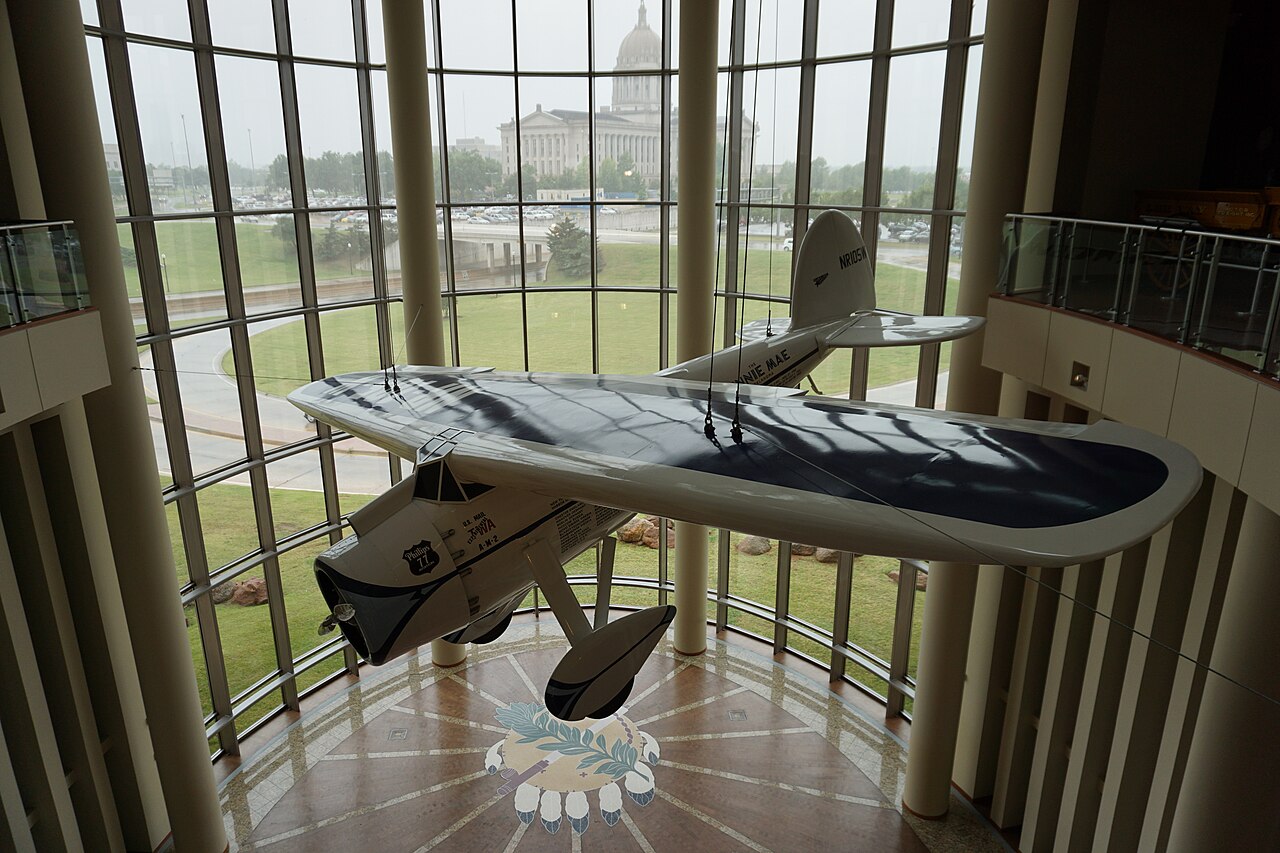
The current museum, which opened at its newly built location in 2005, is a public testament to the significance that Oklahoma places upon its history. Located in Oklahoma City, the museum is across the street from (and offers great views of) the Oklahoma State Capitol building.
The historical significance of Oklahoma itself is very great. Dating back to some of the most ancient Native American cultures in the U.S., the land has a rich history of Native American influence even prior to American settlers. The land was part of the Louisiana Territory and was therefore acquired by the United States during the Louisiana Purchase of 1803. In the years following, American expeditions were sent to explore the area to determine its value and habitability. By the 1830s, the land was designated as Indian territory, a place to relocate the Native American tribes of the east. Thus came the Trail of Tears: the removal of the “Five Civilized Tribes” from the southeastern U.S. to eastern Oklahoma. In the years following, as those tribes turned the wild Oklahoma land into their new home, more tribes were removed from all over the country to Indian territory.
Then came the Civil War. Even though Oklahoma is far from the major battlefields and campaigns of the war, the conflict left its mark on the state. Native American tribes were split into pro-Union and pro-Confederate factions, and battles were waged within the state. Following the war, as punishment for many Native Americans’ support of the Confederacy, the U.S. government took away their rights to use much of Indian territory. It is at this time that cowboys, cattle drives, and the railroads became prominent in the state.
In the 1890s came the land runs, as Americans clamored for the opening of Oklahoma’s “unassigned lands” to settlers and business. Land runs were massive events in which thousands of land-hungry settlers stood behind a starting line and, at the shot of a cannon, raced across the wild Oklahoma plains to “stake their claim” and acquire land. As a result of these land runs, towns and cities formed across the territory literally overnight. As those cities and towns began to grow, that area of the previous “unassigned lands” became known as Oklahoma Territory. Several years later, in 1907, Indian territory and Oklahoma territory were combined to create the modern state of Oklahoma.
In the century since, Oklahoma has continued to develop. The discovery of oil and the explosion of that industry caused the state’s economy to grow rapidly. The land, being a part of the fertile Great Plains region, also proved to be a prime location for farming and ranching. Innovation, education, and business continued to grow in the state as well.
During the 20th century, the state faced many hardships: two world wars, the Great Depression, the Dust Bowl that ravaged the state, economic booms and busts with the oil industry, some of the largest tornadoes recorded on planet Earth, and the tragedy of the Oklahoma City Bombing in 1995—the largest act of domestic terrorism in U.S. history. The state of Oklahoma has nevertheless remained strong and continued to thrive culturally and economically.
Owned By: Oklahoma Historical Society
Operated By: Oklahoma Historical Society
Government Funded: Yes
Did you know?
Oklahoma achieved statehood in 1907, making it the 46th state in the United States. Only four states are younger than Oklahoma. Even the invention of the airplane is older than the state!
Recommended Reading
- The Oklahomans: The Story of Oklahoma and Its People (Volumes I & 2) by John Dwyer
- The Ultimate Oklahoma Guide for Kids by Sue Davis
Reviewed By
Camden Roberts
former Director of Operations for the Red River Institute of History and currently a student at Oklahoma State University, studying history and political science
The opinions expressed above are those of the Reviewer who is providing a good-faith historical assessment to educate the public. Reasonable opinions can vary, and the Reviewer’s opinion is not necessarily the opinion of The Heritage Foundation or its affiliates.