Minute Man National Historic Park
Site of key events of the American Revolution and the opening battles at Lexington and Concord
Site Details
Pin location is approximate.
250 North Great Road
Lincoln, MA 01773
Family Friendly?
Yes
Visitors Per Year
1,000,000+
The “Battle Road Trail” between Lexington and Concord allows visitors to imagine and experience concretely the scope of events in April 1775 as well as the rapid movement of troops and civilians (many wives among them) who aided the “patriot” cause, ministered to the wounded, and provided other support.
Minute Man National Historical Park includes quite a few “Battle Site Explorations” (a helpful battle roadmap is available online and at the Visitors’ Center). Among the most memorable of these are Concord’s Old North Bridge and the accounts of ambushes and battles at Merriam’s Corner and Elm Brook Hill. The “Bloody Angle,” a prominent outcrop of rocks in the park, is highlighted as a place where British soldiers fought a short rearguard action as they began their retreat to Boston. It is important to note that the Battles of Lexington and Concord ended in a rout as Patriot militiamen chased British troops back to Boston, thus beginning what came to be called the “Siege of Boston.”
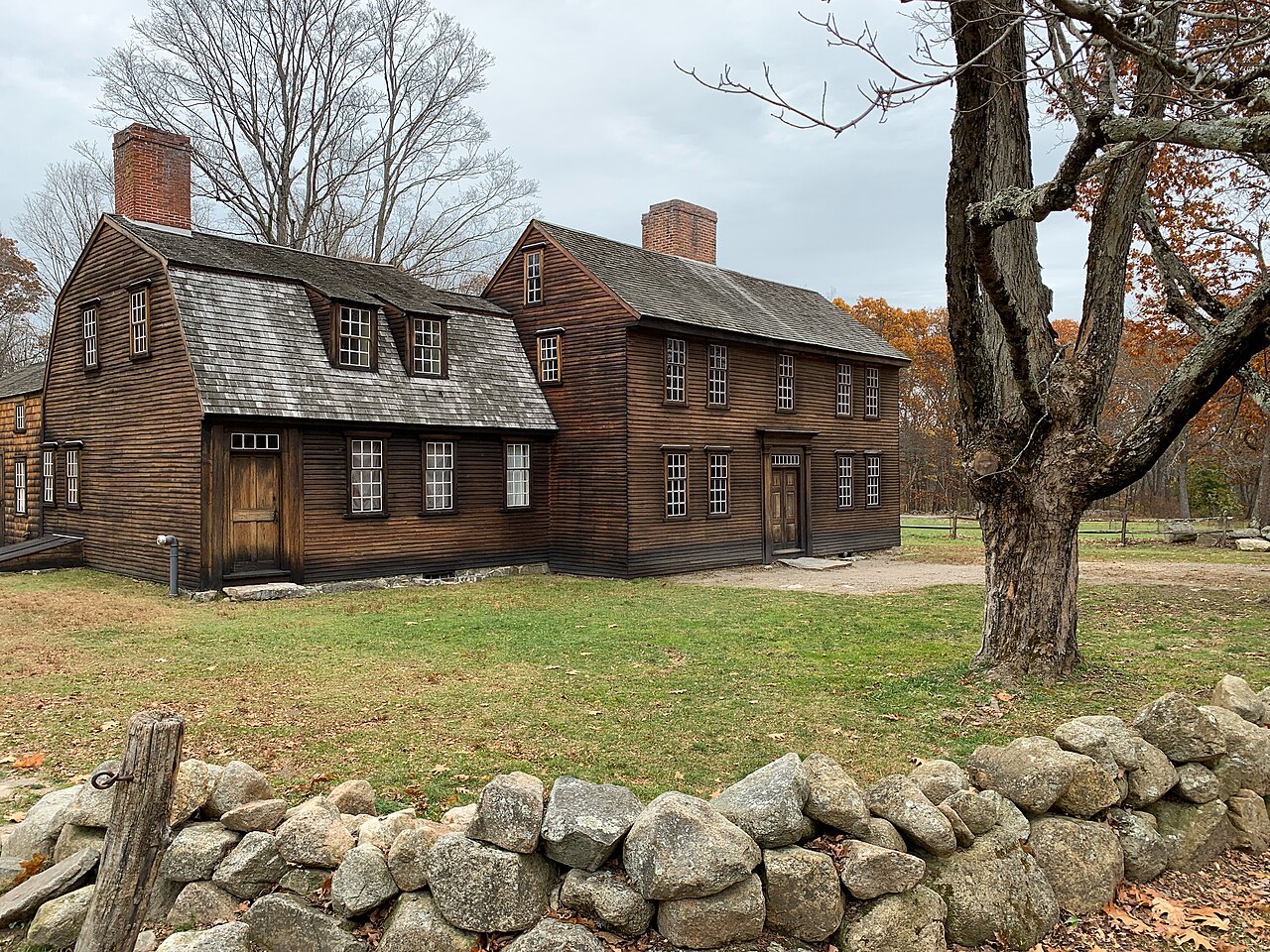
Other exhibits, sites, and links highlight the “Witness Houses” of those who aided the Patriot cause, the British soldiers of 1775, and the numerous gravesites that are strewn throughout the park. These are well done. And the account of prominent and memorable “People” associated with the events of April 19, 1775, includes treatments of prominent political and military figures, their wives, and other women who aided the common cause, and “Patriots of color.” That is all to the good, with no special pleading, ideological bias, or lack of “proportionality” in the treatment of such issues.
The Visitors’ Center is both useful and pleasant. It regularly includes presentations on various issues related to the Battles of Lexington and Concord and the broader revolutionary struggle. Friendly rangers also give accessible and informative presentations throughout the park.
Visitors to the park should make a stop at Lexington Green (in the heart of town) to witness the wide-open space where the first military skirmish of the Revolutionary War occurred. The Green includes some fitting plaques and small-scale monuments. The Lexington Battle Green is not an official part of Minute Man National Historical Park, although the park and the city of Lexington regularly coordinate commemorative activities.
There are no issues with historical accuracy. The various events associated with the Battles of Lexington and Concord are presented in a clear and comprehensible manner.
There is no appreciable ideological bias and certainly no effort to belittle the American Revolution or the Patriot cause. While there could be more emphasis on the ideas undergirding the revolutionary cause, that kind of thing can readily go astray. With that in mind, the park’s “historical” focus seems advisable. That story is told well with no significant distortions or lacunae.
The park is family–friendly, but come prepared to walk (the “Battle Road Trail” between Lexington and Concord at the heart of the events on April 19, 1775, covers just shy of five miles). It is also possible to drive to discrete sections of the park. Families should take advantage of the Visitors’ Center, which includes helpful booklets and pamphlets, as well as memorabilia, souvenirs, and informative presentations.
If the Declaration of Independence of July 4, 1776, nobly codifies the principles underlying the American struggle for national independence and republican self-government, the events of April 1775 commemorated at Minute Man National Historical Park richly illustrate the spirited regard for freedom and the courageous defense of hearth and home that led the patriots of that time to risk life and limb for the cause of liberty. Here “Minute Men” from Lexington and Concord and many neighboring communities fought back against British troops (under the leadership of General Gage) who were attempting to seize rebel arms and crush the incipient rebel movement. These bloody encounters at Lexington and Concord on April 18-19, 1775, marked the beginning of what has come to be called the Revolutionary War. The “United States” truly begins to take shape with “the shot heard round the world.”
Owned By: The National Park Service
Operated By: The National Park Service
Government Funded: Yes
Did you know?
Militia from dozens of neighboring towns arrived within hours of being informed about the approach of British forces to Lexington and Concord.
Recommended Reading
- The Day the American Revolution Began: 19 April 1775 by William H. Hallahan
- Let It Begin Here!: Lexington and Concord by Dennis Brindell Fradin (illustrations by Larry Day)
- The Battle of April 19, 1775 by Frank Warren Coburn
Reviewed By
Daniel J. Mahoney
Senior Fellow at the Claremont Institute and Senior Visiting Fellow at Hillsdale College’s D.C. Campus
The opinions expressed above are those of the Reviewer who is providing a good-faith historical assessment to educate the public. Reasonable opinions can vary, and the Reviewer’s opinion is not necessarily the opinion of The Heritage Foundation or its affiliates.