Klondike Gold Rush National Historical Park
Site commemorating the last great gold rush of the 19th century, when thousands of prospectors poured through Skagway, Alaska, and over treacherous mountain passes in pursuit of Yukon gold.
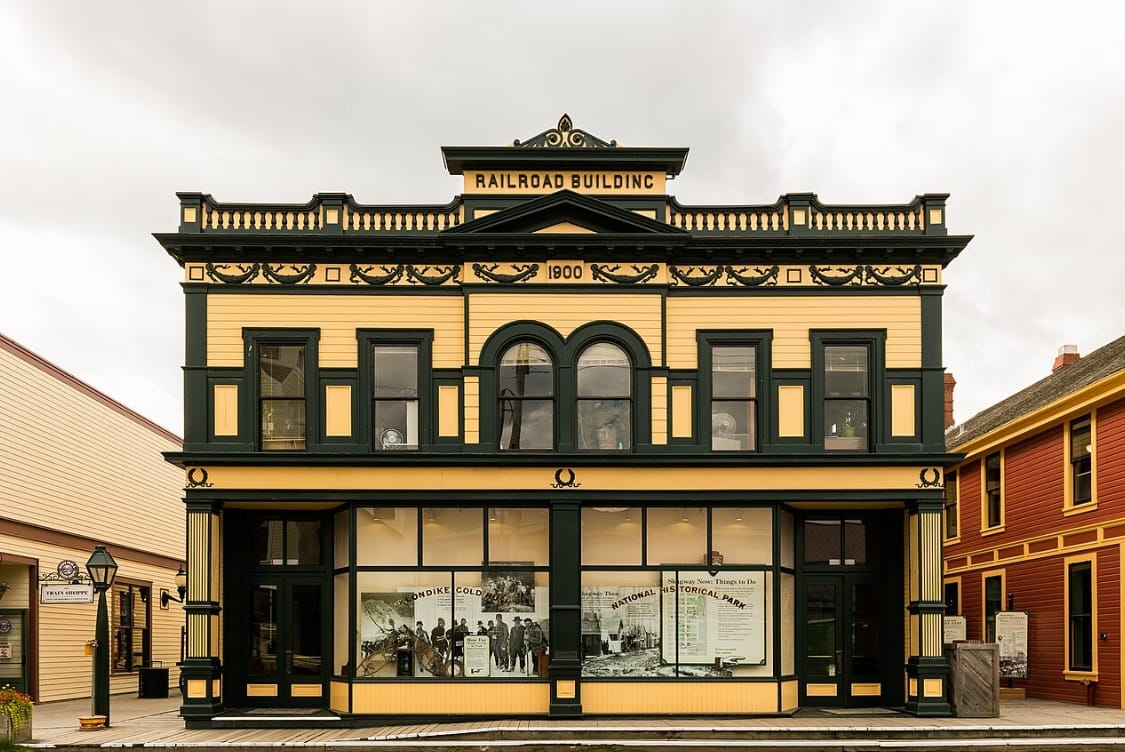
Site Details
Pin location is approximate.
2nd & Broadway
Skagway, AK 99840
Family Friendly?
Yes
Visitors Per Year
1,000,000
All ranger talks and tours of historic buildings are free to the public.
- Park Film: Gold Fever: Race to the Klondike introduces kids to the story in an exciting way.
- Ranger Talks: Families can learn from ranger talks that vary daily, covering topics such as Gold Rush 101, Why Is Alaska Shaped Like That?, Through Forest and Frost, and more.
- Historic Museums: Visitors can explore the Mascot Saloon, the Moore Homestead, and Jefferson Smith’s Parlor.
- Junior Ranger Activity Center: Kids can earn badges, touch artifacts, and explore with Adventure backpacks.
- Interactive Gold Rush Museum: Visitors can gain an understanding of climbing icy passes with a year’s worth of supplies for a chance at gold.
The Chilkoot Trail: Adventure for Families. Family Day Hikes are best for children aged eight and older who can hike 4–6 miles round trip. These trips have educational stops and scenic views to keep kids engaged.
- Dyea to Finnegan’s Point (5 miles one way): Forested and fairly flat, with views of Irene Glacier,
- Dyea to Canyon City (7.7 miles one way): Includes some river scenery and historic tramway ruins.
Safety Tips: Be aware of bears, carry water, wear sturdy shoes, and dress in layers.
Dyea: Ruins, Hiking, and Camping. Once a bustling Gold Rush town, Dyea is now mostly quiet forest with scattered ruins and old foundations. Families can walk self-guided trails to explore the ghost town atmosphere. National Park Service Dyea Campground (about 9 miles from Skagway):
- 22 first-come, first-served sites.
- Fire rings, picnic tables, pit toilets (no hookups or potable water).
- Ranger-monitored, open when snow free.
- The campground is also a starting point for Chilkoot Trail day hikes.
White Pass Trail and Railroad. The White Pass and Yukon Route Railroad, built in 1898–1900, offered stampeders an alternative to the Chilkoot Trail. Today, families can ride the White Pass Summit Excursion (2.5–3 hours round trip), passing waterfalls, tunnels, and trestles while learning the story of the stampeders. The railroad is not owned by the Park Service, but it is one of Skagway’s most popular family experiences. Children are welcome, and many families report that this scenic ride is a highlight of their trip.
While most interpretation is accurate, rangers appear to go off script at times and some signage could be more balanced. In particular, some signs suggest that the Gold Rush uprooted Native peoples from their homes, despite evidence that Native peoples used the area only seasonally and were not concentrated in Skagway itself. Overall, the park is educational and provides a vivid, family-friendly picture of one of the great adventures in American history. Ranger talks and exhibits capture both the excitement of the rush and the grueling reality of carrying heavy loads, facing harsh weather, and confronting disappointment. The park also connects these stories to the landscapes and the Native people, whose lives were changed by the rush.
Some signage exaggerates the extent to which Native peoples used the area, suggesting they were uprooted from their homesites in Dyea and Skagway during the Gold Rush. These signs are inaccurate and show some ideological bias, as the Native peoples used this area on a seasonal basis and were not concentrated in the village of Skagway prior to the Gold Rush.
The Klondike Gold Rush National Historical Park is a great choice for families with school-age children. With hands-on history, ranger talks, kid-focused activities, and family-friendly hikes, children can learn while having fun.
Years before gold was discovered, Captain William Moore recognized Skagway’s potential as a gateway to the interior. In 1887, he and his son claimed a homestead there and built a cabin and wharf. When the Gold Rush began in 1897, stampeders poured through his land, and his foresight in choosing Skagway proved correct.
The rush transformed Skagway from Moore’s small homestead and a scattering of tents into the largest city in Alaska almost overnight. It brought trails, steamship traffic, and eventually the White Pass Railroad, which opened up the north to lasting development. Merchants, transport companies, and other businesses stayed even after the rush ended, giving Skagway and Dawson City permanent roles in Alaska and Yukon history.
For families visiting today, the park brings to life the adventures and hardships of the stampeders, which included icy passes, the gamble of leaving everything behind, and the determination that helped shape the Alaska and Yukon we know today.
Skagway is located at the northern tip of Alaska’s Inside Passage, near the Canadian border. Despite its small size, it is one of the most visited towns in Alaska, thanks to its Gold Rush history and scenic setting. Families can reach Skagway in several ways:
- Cruise Ships: The most common way to arrive, with ships docking just steps from downtown.
- Alaska Marine Highway Ferry: The state ferry system connects Skagway to other Inside Passage communities. This is a slower but scenic option, especially for families who want to bring a car.
- By Car: Skagway is one of the few towns in Southeast Alaska connected to the road system. Families can drive from Whitehorse, Yukon, along the scenic Klondike Highway, which follows the old stampeders’ route.
- By Plane: Skagway has a small airport with daily flights from Juneau (about 45 minutes). This is the fastest option for independent travelers.
Owned By: The National Park Service
Operated By: The National Park Service
Government Funded: Yes
Did you know?
Skagway’s population boomed shortly after gold was discovered in the Klondike at Rabbit Creek (now known as Bonanza Creek) in 1896, making it Alaska’s largest city at that time.
Recommended Reading
- Gold Rush Dogs by Claire Rudolf Murphy and Jane Haigh
- Klondike: The Last Great Gold Rush, 1896–1899 by Pierre Berton
- Klondike Gold Rush National Historical Park (Alaska Geographic)
- That Fiend in Hell: Soapy Smith in Legend by Catherine Holder Spude
Reviewed By
Brenda Josephson
Board Member for Alaska Gold Communications, Inc., and Senior Contributor for Must Read Alaska, Foodies and Foragers
The opinions expressed above are those of the Reviewer who is providing a good-faith historical assessment to educate the public. Reasonable opinions can vary, and the Reviewer’s opinion is not necessarily the opinion of The Heritage Foundation or its affiliates.