Historic Jamestown
Site of the first permanent English settlement in British North America, which served as Virginia’s capital from 1616 to 1699
Site Details
Pin location is approximate.
1368 Colonial Parkway
Jamestown, VA 23081
Family Friendly?
Yes
Visitors Per Year
200,000
These three sites are independent of each other, but the first two sit side-by-side and share parking and ticket office space. It is possible to purchase a ticket just for the national park, but if visitors want to visit Jamestown Rediscovery, they must purchase tickets for both. Jamestown Settlement is about a mile away from the other two sites and has its own admission fee.
Historic Jamestown (National Park):
- The visitors’ center has a 15-minute film that provides a good overview of the early settlement of Jamestown.
- The visitors’ center has a small museum with informative signs/images.
- Interpretive rangers provide an overview of early Jamestown twice each day.
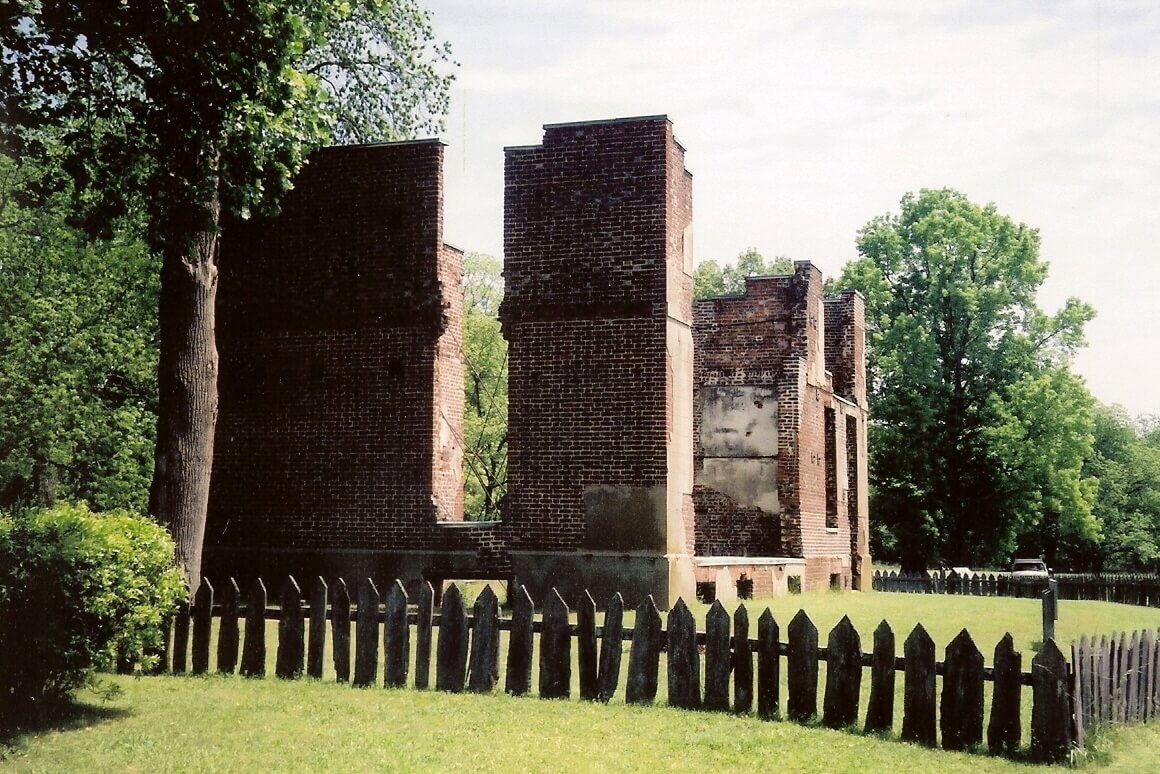
- Recently built brick foundations one to three feet high show where the houses were, but none of the historic buildings remain. Informative signs offer information about the people who lived there in the 1600s.
- Admission to Historic Jamestown enables visitors to visit the Glasshouse, a reconstructed facility where reenactors blow glass as was done in colonial America.
Jamestown Rediscovery:
- Jamestown Rediscovery sits on the original site of Jamestown.
- The foundation has done a lot of archaeological work and has reconstructed the walls of the original James Fort.
- The foundation has replicated some buildings, e.g., a blacksmith shop, and occasionally, reenactors are there to discuss their work.
- They have marked the site of the 1608 Anglican Church and the burial place within the church of four prominent men.
- An archaeological museum, called an Archaearium, contains a wonderful collection of artifacts from the original site.
- The site offers excellent tours by archaeologists that are interesting and informative. There are sometimes volunteer guides who can answer questions, which is useful if a tour is unavailable.
Jamestown Settlement:
- The museum displays a 15-minute film that provides a solid overview of the settlement of Jamestown.
- The museum has excellent galleries filled with artifacts. Informative signs provide an overview of Jamestown, from the Natives who lived there before Europeans arrived through 1699.
- There are many digital displays and many of these are interactive. Some will be of interest to the whole family, but others are primarily intended for children.
- The museum appropriately focuses on Jamestown’s contributions to American history, such as the creation of a representative legislature in 1619. It also provides an overview of daily life for the original inhabitants, including the living conditions for enslaved Americans, yeomen, and wealthy Americans.
- Outside the museum is a replica of a Native village, called Paspahegh Town, which includes a dozen Native dwellings and seven or eight reenactors doing things like cooking, making a canoe, and discussing trading practices.
- The settlement contains replicas of the Susan Constant, Godspeed, and Discovery, the three ships that brought the original settlers to Jamestown.
- It contains a re-created 1610–1614 fort, where one can enter the guardhouse, Anglican church, blacksmith’s shop, dwellings, and discuss life in the fort with reenactors.
Historic Jamestown National Park: movie and signs in the Visitor Center provide a good overview of the settling of Jamestown.
Jamestown Rediscovery: The Archaearium has artifacts and signage that provides an excellent overview of early Jamestown. To appreciate the rest of the site one needs to take a guided tour. Archaeologists give a great talk about what they do there, what they have discovered, and why some discoveries were significant.
Jamestown Settlement: The introductory movie, signage at the museum gallery, and the presentation by the reenactors are all accurate. The galleries provide a very comprehensive overview of Jamestown beginning before Europeans arrived and ending in 1699 when the capital was moved to Williamsburg. If visitors were to read every sign carefully, they could easily spend three to four hours in the galleries. Reenactors are knowledgeable.
Historic Jamestown and Jamestown Settlement: The movies at both institutions are reasonable and fair. Both emphasize the introduction of enslaved Africans in 1619, but not in a heavy-handed way. The tour guides at Jamestown Rediscovery and the reenactors at Jamestown Settlement are non-ideological.
Combining Historic Jamestown, Jamestown Rediscovery and Jamestown Settlement would make a nice day for families without being overly exhausting. Jamestown Settlement has a cafeteria with lots of kid-friendly food (hamburgers, hotdogs, and pizza) and prepackaged salads for adults trying to avoid fast food.
Historic Jamestown: The historic part of the national park, i.e., the rebuilt foundations, is not very interesting. But, since one has to pay the admissions fee to get into Jamestown Rediscovery, a family should spend 30-45 minutes watching the movie and reading the displays at the visitor center. Children may find the ruins boring, but they will likely be interested in the Glasshouse, especially when the reenactors are engaged in glassblowing.
Jamestown Rediscovery: Adults and older children will likely be interested in the archaeological tours. All visitors six and older should enjoy and learn from displays in the Archaearium. If planning a family tour, allot 2–2.5 hours for this part of the tour.
Jamestown Settlement: Families with children over six years old will probably want to watch the movie, spend 45 minutes in the museum galleries, and then spend two hours visiting the Paspahegh Town, ships, and fort. Reenactors in all places are doing interesting things (using fire to make a canoe out of a log, cooking dinner, making horseshoes, etc.) and they are happy to engage with visitors.
In both places, the minds of children under six will probably start to wander quickly, but at least they are able to be outside and run around at each site. Interacting with the reenactors may keep the attention of younger children for a bit longer than, say, museum displays.
Jamestown was the first permanent English Settlement in British North America, and it served as the capital of Virginia from 1616 to 1699. The town was originally on land now owned by Historic Jamestown and Jamestown Rediscovery. Jamestown Settlement has lots of great artifacts/displays/presentations.
Owned By: Historic Jamestown: The National Park ServiceJamestown Rediscovery: Jamestown Rediscovery FoundationJamestown Settlement: Jamestown-Yorktown Foundation
Operated By:
Historic Jamestown: The National Park Service
Jamestown Rediscovery: Jamestown Rediscovery Foundation
Jamestown Settlement: Jamestown-Yorktown Foundation
Government Funded: Yes
Did you know?
It was near Jamestown that Pocahontas reportedly saved Captain John Smith and in Jamestown that she married John Rolfe.
Recommended Reading
- Love and Hate in Jamestown by David Price
- 1619: Jamestown and the Forging of American Democracy by James Horn
- The Settling of Jamestown by Jante Riehecky
- Pocahontas: Facilitating Exchange Between the Powhatan and the Jamestown Settlers by Jeanne Nagle
Reviewed By
Mark David Hall
Professor in Regent University’s Robertson School of Government
The opinions expressed above are those of the Reviewer who is providing a good-faith historical assessment to educate the public. Reasonable opinions can vary, and the Reviewer’s opinion is not necessarily the opinion of The Heritage Foundation or its affiliates.