Harriet Tubman National Historical Park
Home of the influential abolitionist, where she lived, aided formerly enslaved people, and later founded the Harriet Tubman Home for the Aged and Infirm Negroes
Site Details
Pin location is approximate.
180 South Street
Auburn, NY 13021
Family Friendly?
Somewhat
Visitors Per Year
9,000-11,000
Harriet Tubman National Historical Park: The Parsonage includes eight exhibit panels that offer a brief and accurate introduction to Tubman and the historical significance of Auburn and its surroundings. The small, restored Thompson Memorial A.M.E. Zion Church next door offers seating on church pews for a presentation by a Park Service ranger that lasts 15 to 20 minutes. Visitors can learn about the process of restoring the church to its 1913 appearance (the year Tubman died).
Harriet Tubman National Home Visitor Center: Historical panels and a timeline display offer a pictorial overview of the life of Tubman and the abolitionist movement. Interpretive placards offer visitors information about Tubman as they wait for the main presentation, a lively and engaging talk. Two talks per day are offered throughout the season from Tuesday to Saturday.
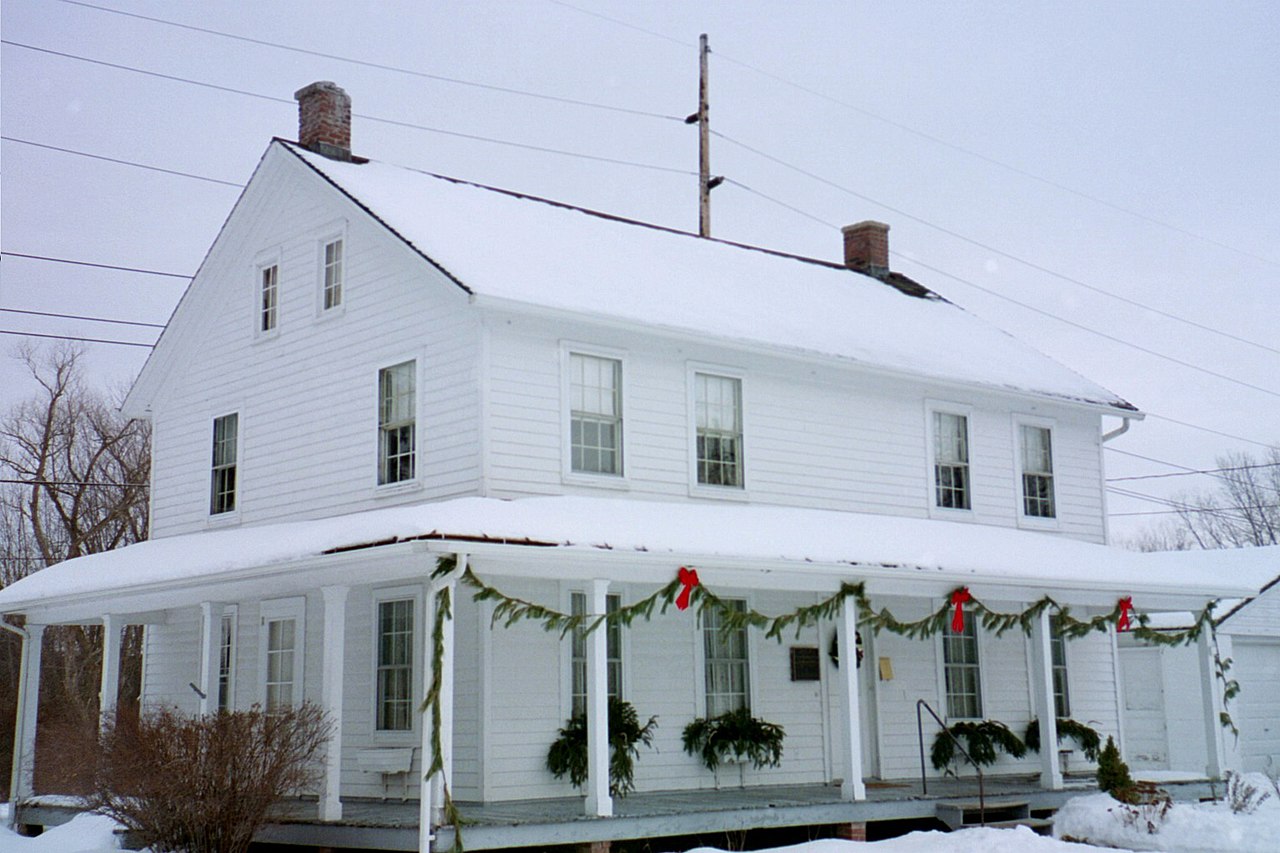
Afterward, visitors can travel across the yard to the Tubman Home for the Aged, where Tubman spent the last two years of her life. A short, self-guided tour of the inside with period furniture is offered. Tubman’s home is closed to tours, but visitors can walk the surrounding grounds.
Harriet Tubman National Historical Park: Ranger talks emphasize Tubman’s “self-emancipation,” and tend to downplay the role of other abolitionists. The theme of “self-emancipation” is emphasized even more strongly in the presentation at the Visitor Center of the Tubman Home. The notion of self-emancipation is reflected in the site’s official NPS website as an effort to acknowledge the “agency” of the enslaved and correct the historical record in which credit for emancipation was given to “whites.” This is not an accurate portrayal, as the Underground Railroad was a cooperative effort by whites and blacks to help the enslaved escape to free states or to Canada. White abolitionists, like black abolitionists, provided funds, transportation, guidance, and shelter to escapees. White abolitionists voluntarily risked, and sometimes lost, their own lives, freedom, and financial security.
Harriet Tubman National Home Visitor Center: Talks correct some of the more outrageous claims that have passed down in legend, but nonetheless tend to exaggerate Tubman’s accomplishments and the discrimination she faced.
Talks also tend to stress that Tubman was cheated of her full pension and military honors because of racism. However, delays in receiving pensions were common among Civil War veterans and their widows, regardless of race, during the confusion of the postwar period. The attractively illustrated panels, by providing mostly accurate historical context, balance out the exaggerations about Harriet Tubman, the individual, in the presentation. An illustrated timeline presents events in Tubman’s life in a parallel line to events in history. Panels with such titles as “Auburn, New York: Center of Reform” and “Underground Agents Who Helped Harriet Tubman” situate Tubman in history. Artifacts from the archeological digs on site are displayed in a few glass cases and consist mostly of dinnerware. Because only about 30 minutes is allotted at the end of the presentation for viewing, visitors, especially during busy times, may not be able to read all the panels.
While the ranger presentations are overall objective and easy to understand, the presentation at the home exhibits ideological bias and appears to be infused with racial grievances. The presentation there condemns recent criticisms of bias at the Smithsonian Institution, which it characterizes as a “repository of ‘our stories.’” Lectures emphasize avoiding the use of such terms as “slave” or “slave owner” or “colored” (except when quoting historical terms or organizational names) and instead using “enslaved person” or “enslaver” (as outlined on the NPS website).
At the Harriet Tubman National Historical Park, crayons and coloring book pages are offered to children, which can occupy them during the ranger lecture, which lasts 15–20 minutes. The talk at the Tubman home lasts almost two hours and probably would not hold the interest of young children. Many school groups visit, especially in February for Black History Month.
Both sites are within 1.5 miles from downtown Auburn, which offers a number of restaurants and shops. The Visitors’ Center at the New York State Equal Rights Heritage Center in the center of town provides brochures and displays. While the brochures offer useful information, such as a map for a walking tour to the Tubman sites, Fort Hill Cemetery, and the Seward House Museum, the building itself features a large gay pride flag in the window and interpretive displays that promote a left-wing agenda of equal rights.
Harriet Tubman has played a significant part in American historical memory, especially in the African American community. She is an inspirational figure—a brave fighter who overcame barriers of race and sex. Tubman was an enslaved woman who escaped from Maryland to the North with the help of abolitionists and then returned approximately 13 times to liberate some 70 family members and friends. She became a revered figure to African Americans beginning in her lifetime.
Since the 1960s, there has been a renewed interest in Tubman, and she has since become a national legend. By 2008, she was named the third most famous American in history by teenagers, following Martin Luther King, Jr., and Rosa Parks. Her picture has twice been placed on postage stamps, and a years-long campaign has been underway to replace Andrew Jackson’s image on the $20 bill with Tubman’s.
Today’s national historical park preserves the Thompson Memorial A.M.E. Zion Church, which was the church that Tubman attended and where her funeral service was held. Tubman also established the Harriet Tubman Home for the Aged for black Americans who, because of slavery, had been left without family members to care for them in old age.
Owned By: Harriet Tubman National Historical Park: The National Park Service, Harriet Tubman National Home: The Harriet Tubman Home, Inc., and The National Park Service.
Operated By: Harriet Tubman National Historical Park: The National Park Service, Harriet Tubman National Home: The Harriet Tubman Home, Inc., in partnership with The National Park Service
Government Funded: Yes
Did you know?
John Brown, who led the failed raid on Harpers Ferry, admiringly dubbed Harriet Tubman “General Tubman” and wrote about her, “He is the most of a man, naturally, that I ever met with.”
Recommended Reading
Harriet Tubman: Myth, Memory, and History by Milton C. Sernett
Bound for the Promised Land: Harriet Tubman, Portrait of an American Heroine by Kate Larson
Reviewed By
Mary Grabar
Former college instructor, resident fellow at The Alexander Hamilton Institute for the Study of Western Civilization, and author of three books about Howard Zinn, the 1619 Project, and President Franklin Roosevelt
The opinions expressed above are those of the Reviewer who is providing a good-faith historical assessment to educate the public. Reasonable opinions can vary, and the Reviewer’s opinion is not necessarily the opinion of The Heritage Foundation or its affiliates.