Eisenhower Presidential Library, Museum, and Boyhood Home
Boyhood home and final resting place of the only five-star general to become President, who led the Allied invasion of Normandy
Site Details
Pin location is approximate.
400 S Buckeye Ave
Abilene, KS 67410
Family Friendly?
Yes
Visitors Per Year
60,000
The site is one of the presidential libraries operated by the National Archives. Most of the site is self-guided and consists of the Museum, Visitors’ Center, Library, Boyhood Home, Place of Meditation, and outdoor grounds.
- Museum: The museum is arranged chronologically. Visitors move clockwise through an exhibit on his early years and longer exhibits on his leadership in World War II and his presidency. There are two smaller sections, one on his wife, Mamie, and the other on his Farewell Address and post-presidential years. Rotating special exhibits also appear. The permanent exhibits are proportionate to the most important aspects of his public life.
- Visitors’ Center: The Visitors’ Center includes a gift shop where visitors purchase tickets.
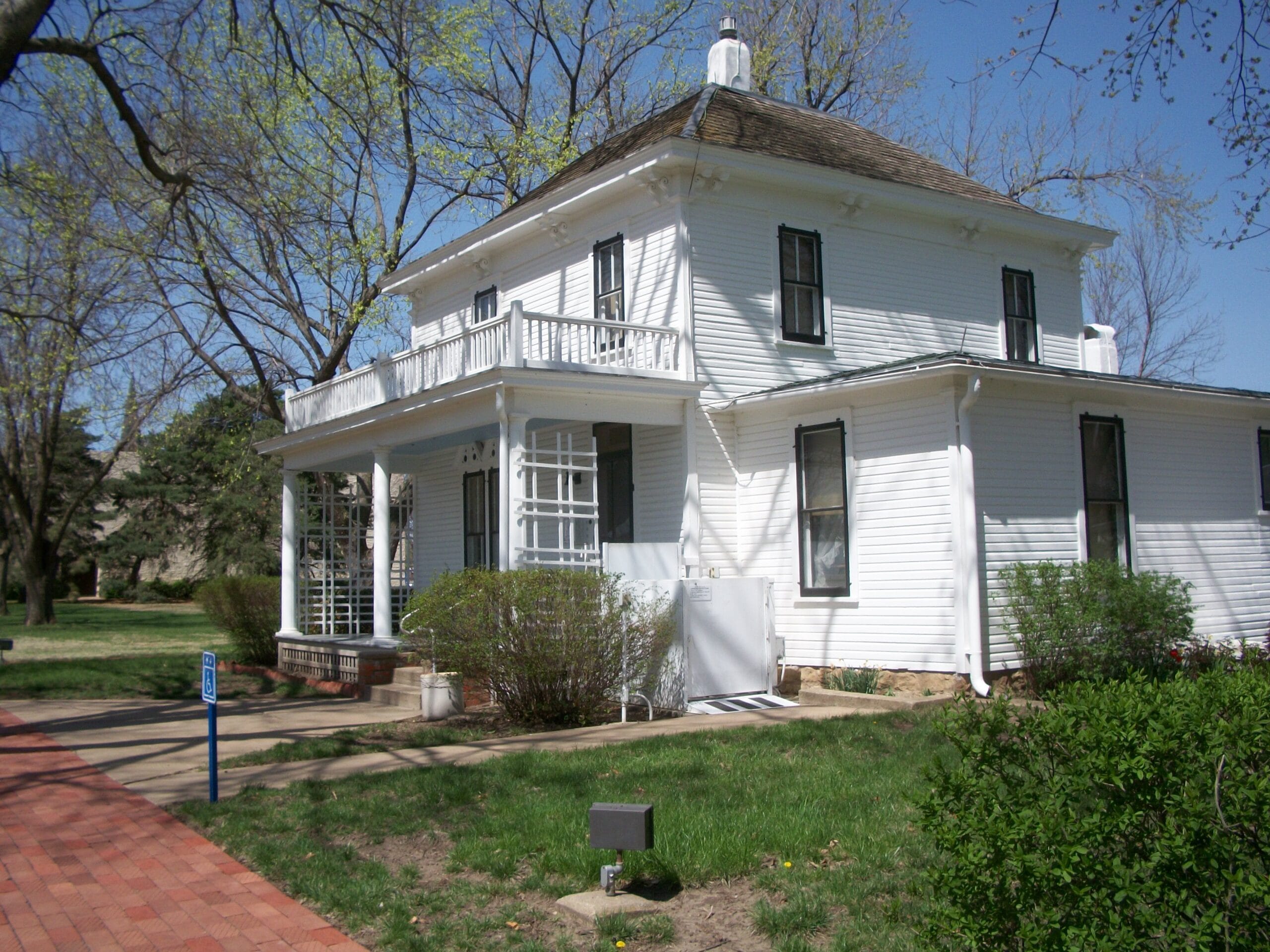
- Boyhood Home: Short, guided tours are offered for an extra fee on most days that the museum is open. A video tour of the home is available in the library. Eisenhower lived in this home from 1898 until he left for West Point in 1911. His parents lived in the home until their deaths in the 1940s, and it has been open to the public since 1947.
- Library: This is the section of the campus for researchers, public talks, and temporary or special exhibitions for visitors. There is also a video tour of the boyhood home.
- Place of Meditation: This is the burial place of Dwight and Mamie Eisenhower, as well as their firstborn son, who died of scarlet fever at the age of three.
- Outdoor grounds: This is a nice area to walk around, especially with children. The highlight is a large statue of Eisenhower.
The permanent exhibits are fascinating, accurate, and informative. The museum emphasizes the development of Eisenhower’s leadership capacity and his character, showing how Eisenhower sought out and made the most of opportunities to learn and exercise prudence. While relatively little attention is paid to the years between 1945 and 1953, this gap is understandable and proportionate to the major events of Eisenhower’s life.
There is no evident ideological bias. The treatment of the American alliance with the Soviet Union, internationalism after World War II, the Suez Crisis, and NATO reflects the conventional liberal narrative. The museum steers clear of contemporary politics. Eisenhower’s complex evaluation of the post-war world and the American empire could shed some light on today’s debates in foreign policy, but the museum is studious in sticking to the narrative. Similarly, the display on Eisenhower’s Farewell Address emphasizes his warning about the “military-industrial complex,” but offers no explanation or additional context that would be worthy of contemporary consideration.
The Eisenhower Museum and Library is a large campus with a beautiful lawn where children will enjoy running around. Older children will enjoy many of the exhibits. There are several interesting videos scattered throughout the exhibits, as well as a phenomenal electronic map that provides an excellent short history of the entire duration of World War II. Parents will appreciate the museum’s emphasis on Eisenhower’s moral seriousness in seeking out opportunities to develop his character.
The Dwight D. Eisenhower Presidential Library, Museum, and Boyhood Home occupy a campus on the site of the property in the small town of Abilene in the Smoky Hills of Kansas, where the Eisenhower family lived from 1898 until 1946. Eisenhower always considered this to be his home.
The museum tells the story of an American hero who exercised his great capacities for the benefit of his country and the free world. Every aspect of Eisenhower’s life after he left Kansas is extraordinary, particularly his World War II service and his presidency. During World War II, Eisenhower oversaw American operations in the European theater and commanded Allied forces during the invasion of North Africa and Italy. He was Supreme Commander of the Allied Expeditionary Force and was responsible for D-Day and the liberation of Western Europe from Nazi Germany. During his two terms in office as President (1953–1961), Eisenhower managed to maintain strength against communism through the NATO alliance and deterrence against the Soviet Union. At the same time, he exercised restraint to avoid nuclear war. He presided over a time of economic growth and middle-class prosperity and championed the Interstate Highway System. He signed the first Civil Rights Acts since Reconstruction. Eisenhower also exemplifies the capacity of American citizens with natural abilities to make the most of themselves through persistence and hard work.
The director of the Eisenhower Library recently resigned. News reports at the time suggested that it might have had something to do with a disagreement over the use of an Eisenhower sword as a gift from the United States to King Charles III. Another possible factor was a planned partnership with the Eisenhower Foundation to expand the museum in time for the 250th anniversary of the signing of the Declaration of Independence in 2026.
Owned By: National Archives and Records Administration
Operated By: National Archives and Records Administration
Government Funded: Yes
Did you know?
Despite living all over the world, Eisenhower always considered Abilene, Kansas, his home.
Recommended Reading
- The Age of Eisenhower: America and the World in the 1950s by William Hitchcock
- Eisenhower in War and Peace by Jean Edward Smith
Reviewed By
Kevin Vance
Associate Professor and Director of the Center for Constitutional Liberty at Benedictine College
The opinions expressed above are those of the Reviewer who is providing a good-faith historical assessment to educate the public. Reasonable opinions can vary, and the Reviewer’s opinion is not necessarily the opinion of The Heritage Foundation or its affiliates.