Edgar Allan Poe House and Museum
Residence of the American writer and poet, considered by some to be “the father of the modern short story” and “the inventor of detective fiction”
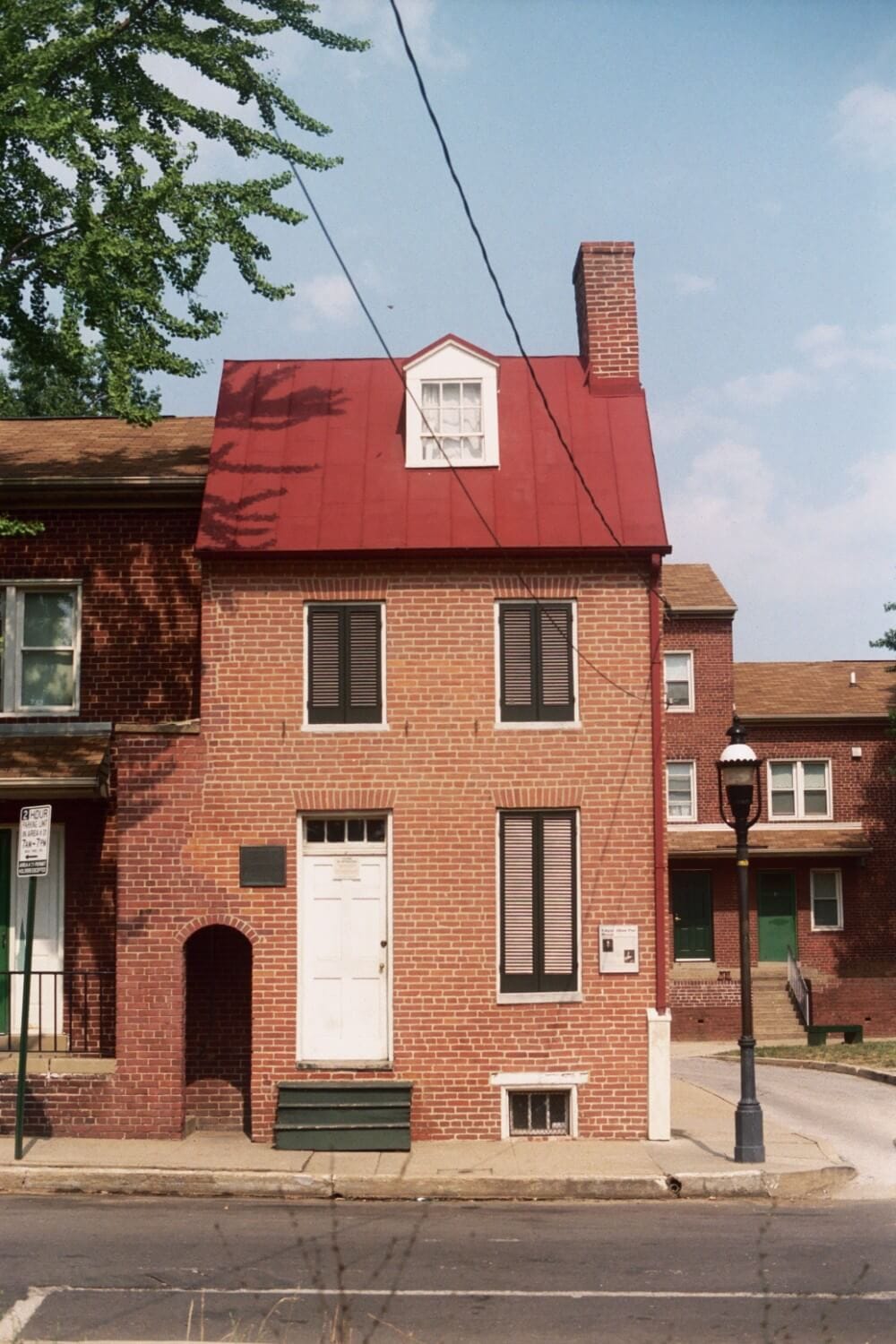
Site Details
Pin location is approximate.
203 N Amity St
Baltimore, MD 21223
Family Friendly?
Yes
Visitors Per Year
19,000
- The tour of the Poe House lasts about a half hour and is devoted to the life, work, and mysterious death of Edgar Allan Poe in the city of Baltimore. Guides welcome visitors, who are then invited to explore the small house on a self-guided tour. Wall plaques detail the works that Poe produced while he was living in the house, Poe’s family roots in Baltimore, and the strange circumstances of his death in Baltimore in 1849, at age 40.
- An audio tour of the house may be purchased for an additional fee and accessed via personal mobile phone. Information covered by the audio tour includes alterations made to the house since Poe’s time, as well as the likely arrangement of furniture in each room, and speculation about where Poe slept and wrote in the house.
- A welcome center offers further information about the history of the site, upcoming events, and additional Poe-related sites in the city (including directions to his grave site at the nearby Westminster Hall and Burial Ground).
The signs displayed throughout the house are clear and accurate (though they do contain the odd typo).
The story of Poe’s time in Baltimore is presented without editorial bias.
Part of the exhibit deals with the mystery surrounding Poe’s death in Baltimore, details of which may not be appropriate for very young children. Each October, the Poe House hosts the International Edgar Allan Poe Festival & Awards. The house is small, and not a lot of material in it is likely to engage very young children. The Poe House, however, is planning a significant renovation and expansion, which will increase the scope of its offerings. A $150,000 commitment from the Wells Fargo Foundation in 2025 is projected to seed a funding campaign to support a 17,000-square-foot addition.
Edgar Allan Poe (1809-1849) is one of the United States’ most celebrated writers, considered by some as “the father of the modern short story” and “the inventor of detective fiction.” Despite abject poverty, an itinerant life, and nagging depression, Poe produced, during his short life, tales and poems that have captured readers’ imaginations both in the U.S. and around the world. His popularity is enduring, with poems such as “The Raven” and “The Bells,” and tales such as “The Murders in the Rue Morgue,” “The Pit and the Pendulum,” “The Cask of Amontillado,” “The Masque of the Red Death,” and “The Tell-Tale Heart,” continuing to draw new generations of readers.
Owned By: City of Baltimore
Operated By: Poe Baltimore
Government Funded: Yes
Did you know?
Theories as to what caused Poe’s death include suicide, murder, cholera, hypoglycemia, rabies, syphilis, tuberculosis, influenza, a brain tumor, and that Poe was a victim of cooping (a ballot-box-stuffing scam in which victims were abducted and drugged by local “election gangs”).
Recommended Reading
- Edgar A. Poe: Mournful and Never-ending Remembrance by Kenneth Silverman
- Edgar Allan Poe: A Critical Biography by Arthur Hobson Quinn
- The Portable Edgar Allan Poe edited by J. Gerald Kennedy
Reviewed By
David Yezzi
Professor in the Writing Seminars at Johns Hopkins University
The opinions expressed above are those of the Reviewer who is providing a good-faith historical assessment to educate the public. Reasonable opinions can vary, and the Reviewer’s opinion is not necessarily the opinion of The Heritage Foundation or its affiliates.