Old Idaho Penitentiary
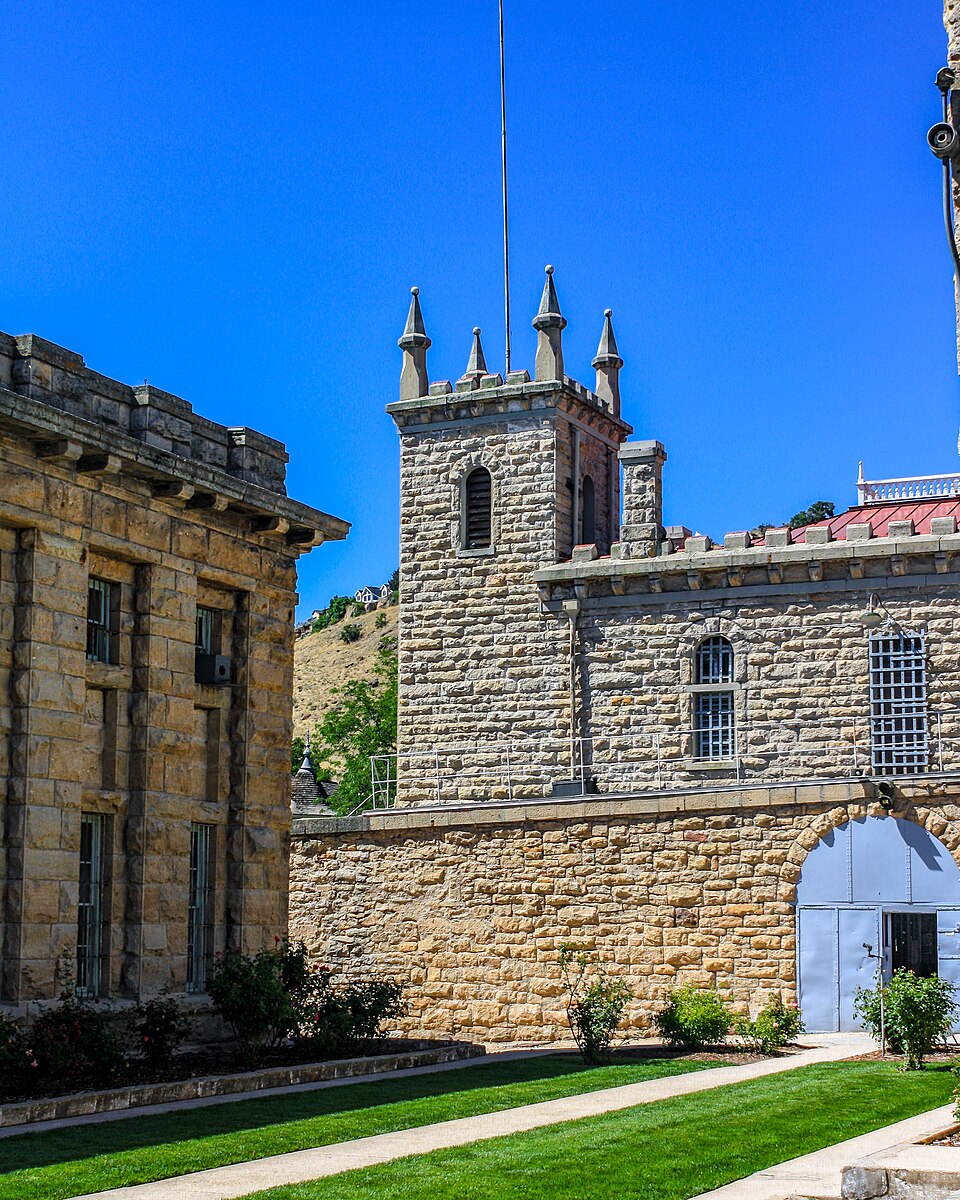
Historic territorial prison in operation for 101 years, now one of only four territorial-era prisons in the United States open to the public as a museum
Site Details
Pin location is approximate.
2445 Old Penitentiary Rd
Boise, ID 83712
Family Friendly?
Yes
Visitors Per Year
70,000
The penitentiary features nearly a dozen exhibits and interpretive panels throughout its four-and-a-half-acre site. These exhibits highlight prison life, biographies of infamous inmates, and the architectural history of the compound. Exhibits include the penitentiary’s notorious “Siberia” cells, in which inmates were placed in solitary confinement, and the penitentiary gallows, which has short biographies of the 10 criminals executed at the penitentiary.
The guided tour lasts roughly an hour. Guides discuss the history of the penitentiary, the various cells and buildings in the compound, and notable inmates and incidents throughout the penitentiary’s 101 years of operation. The tour takes participants through all the major buildings located on the compound including the remnants of the chapel, mess hall, “Siberia” cells, major cell blocks, women’s ward, and gallows.
Though not officially related to the penitentiary, one of the most intriguing exhibits housed at the location is the J. Curtis Earl Memorial Exhibit: Arms and Armament through the Ages. This exhibit offers one of the nation’s largest displays of historical weaponry from the Bronze Age through the Second World War. The collection includes artifacts from the Revolutionary War and the American Civil War, in addition to an 1883 Gatling gun on its original carriage.
The historical site gives a comprehensive history of the penitentiary. Exhibits appear meticulously researched and supported by proper documentation. However, the site’s preoccupation with “humanizing” the inmates may give visitors the impression that the penitentiary was an evil institution. It fails to capture the penitentiary’s positive impact on punishing and dissuading crime and its role in bringing law and order to the “Wild West.”
The historical site’s podcast, Behind Grey Walls, which provides in-depth biographies of individual inmates, also fails to capture the way penitentiaries secure conditions for peaceful living. The podcast is well-researched and captivating and provides a unique look into the historical research process. It also provides excellent resources for descendants of inmates conducting genealogical research. However, certain episodes of the podcast veer too far into commentaries on contemporary critiques of the criminal justice system.
Several exhibits portray the history of the site through an ideological lens. “The Faces of the Idaho State Penitentiary” gives inordinate attention to “overlooked stories of people of color, different religions, (and) various ethnic backgrounds” in order to show that “diversity has always existed in Idaho.” Additionally, an article written by the creator of the “Disturbing Justice” exhibit specifically advances “social justice.” In particular, the exhibit provides a commentary “on the problems of mass incarceration” and confronts “the realities of racism, particularly within the justice system.” To this end, the exhibit was designed to glorify prison riots supposedly caused by the “inhumane conditions” of the penitentiary. The site calls the criminals housed in the penitentiary “residents” rather than “inmates.”
The guided tour ends with a description of heinous crimes punished in the penitentiary’s execution chamber. Moreover, several of the cell blocks display original prison graffiti, including profanity and graphic nudity that may not be suitable for young children.
The Idaho State Penitentiary is one of four surviving territorial prisons still open to the public. Opened in 1870, it was in operation until 1973. The site showcases the evolution of the American penal system and how the nation’s view of criminal punishment changed over time. The stories of the inmates housed at the penitentiary remind citizens of the importance of law and order to a well-functioning society. In particular, the penitentiary’s early history offers a unique look into Idaho’s transition from a frontier territory to a fully civilized and co-equal state of the Union.
Among the penitentiary’s most infamous inmates was Harry Orchard, who was convicted for the 1905 assassination of former Idaho governor, Frank Steunenberg. In 1899, Governor Steunenberg declared martial law in response to a series of violent labor clashes caused by the radical Western Federation of Miners (WFM) and asked President William McKinley to send in federal troops to quell the unrest. Five years after leaving office, Governor Steunenberg was killed in front of his house in Caldwell, Idaho, by a bomb rigged to his side gate. Harry Orchard, a former miner for the WFM, confessed to the murder and claimed to be a hired assassin by the WFM, naming union boss William “Big Bill” Haywood as a co-conspirator. While the members of the WFM were acquitted, Orchard spent the rest of his life in prison.
Owned By: State of Idaho
Operated By: Idaho State Historical Society
Government Funded: Yes
Did you know?
The youngest inmate to ever serve time at the penitentiary was 10 years old: James Oscar Baker was sentenced to five years for killing a man who threatened his father.
Recommended Reading
- Old Idaho Penitentiary by Amber Beierle, Ashley Phillips, and Hanako Wakatusi
- Hanged: A History of Idaho’s Executions by Kathy Dienhardt Hill
Reviewed By
Samuel T. Lair
Director of the Center for American Education at the Idaho Freedom Foundation
The opinions expressed above are those of the Reviewer who is providing a good-faith historical assessment to educate the public. Reasonable opinions can vary, and the Reviewer’s opinion is not necessarily the opinion of The Heritage Foundation or its affiliates.