Herbert Hoover National Historic Site
Birthplace, presidential library, and burial site of America’s 31st President
Site Details
Pin location is approximate.
110 Parkside Dr
West Branch, IA 52358
Family Friendly?
Yes
Visitors Per Year
173,347
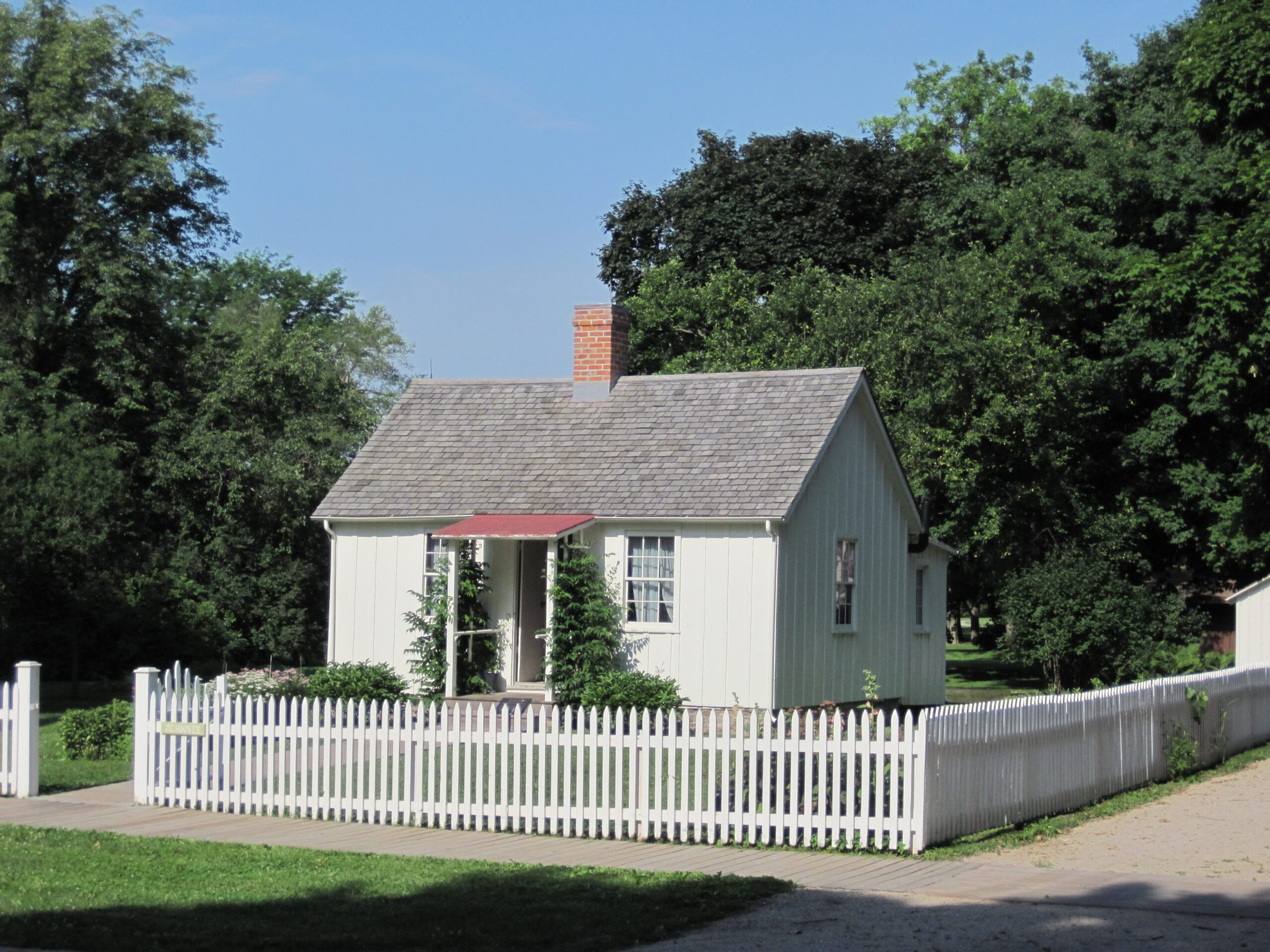
The Herbert Hoover National Historic Site offers a welcome center with a short video about Hoover and numerous exhibits and activities. The historic site includes the cottage in which Hoover was born, the Quaker meetinghouse where he and his family worshiped, his father Jesse Hoover’s blacksmith shop, and the gravesite of President Hoover and his wife Lou Henry Hoover.
The Herbert Hoover National Historic Site is connected by walkable sidewalks, and vehicles can be used to get to some of the buildings. The Historic Site also has a picnic area for families and a tallgrass prairie trail and observation deck.
The library and archives, which contain President Hoover’s papers, along with a vast collection of other papers and documents, are closed to the public unless visitors have an appointment for research or have made arrangements for a special tour.
The Herbert Hoover Presidential Library and Museum contains exhibits that depict the life and career of President Herbert Hoover starting with his birth in West Branch, Iowa. The museum includes authentic artifacts, and the exhibits offer clear and concise historical information about major events, individuals, ideas, and artifacts. Each exhibit focuses on a specific period of Hoover’s life:
- Years of Adventure, 1874–1914: This exhibit starts with Hoover’s birth in West Branch, Iowa, his early family life, his career as a student at Stanford University, his marriage to Lou Henry, and finally his career as a mining engineer.
- Years of Compassion, 1914–1923: The theme of this exhibit is Hoover “The Great Humanitarian.” This centers on Hoover’s humanitarianism during World War I, the organization of the Commission for the Relief of Belgium, and his service as head of the Food Administration.
- Years of Enterprise, 1921–1928: This exhibit centers on Hoover’s appointment and service as Secretary of Commerce under Presidents Warren G. Harding and Calvin Coolidge.
- Years of Leadership, 1928–1933: The presidential campaign of 1928, Hoover’s Inauguration, and his Presidency are the focus of this exhibit.
- The Great Depression: This exhibit explores the causes of the Great Depression, President Hoover’s response, the public reaction to Hoover, and the presidential campaign of 1932.
- Years of Struggle and Acclaim: The years following Hoover’s Presidency are the focus of this exhibit: his influence upon Republican Party politics; humanitarian and charity work; the Hoover Commission; and his friendship with President Harry S. Truman.
- Counselor to the Republic: This exhibit continues with the years following Hoover’s Presidency, and focuses on his influence upon Republican Party politics, the second Hoover Commission, the major events surrounding the Cold War, his passion for fishing, and finally his funeral.
- Lou Henry Hoover: This exhibit centers on First Lady Lou Henry Hoover and the Hoover’s retreat at Camp Rapidan.
The exhibits at the Herbert Hoover Presidential Library and Museum are accurate. The historical information contained in each exhibit is clear and easy to understand, and artifacts that are on display are appropriately identified. The National Historic Site also has historical information throughout the park to help explain the Hoover story.
There is no apparent ideological bias at the Herbert Hoover Presidential Library and Museum or the Herbert Hoover National Historic Site. The exhibits are balanced; even the exhibit on the Great Depression provides a balanced overview.
The exhibits in the Presidential Library and Museum may be difficult for young children to understand, but there are interactive exhibits throughout the museum. The Hoover Library also has a special rotating exhibit throughout the year, with a different theme. During the Christmas season, they usually have a special exhibit of Christmas trees featuring unique aspects of Hoover’s life.
The Hoover National Historic Site is more interactive, because visitors can go into the Quaker meetinghouse, Hoover’s childhood home, and his father’s blacksmith shop. The gravesite of President and Mrs. Lou Henry Hoover are also located on the grounds of the National Historic Site. The gravesite overlooks the entire Hoover campus. Visitors can also enjoy comfortable paved walking paths, and some are accessible by vehicle. Finally, visitors can enjoy a picnic area and a nature walk on the trail that goes through the natural prairie surrounding the Hoover campus.
Herbert Hoover’s story is an American story. Hoover was born in West Branch, Iowa and orphaned at an early age. As a student at Stanford University, he studied geology and, through hard work and initiative, he became a successful mining engineer. Hoover’s career took him to multiple countries, including China, where he and his wife Lou Henry Hoover were caught up in the Boxer rebellion. It was during World War I that Hoover began his career in public service. “The Great Engineer” organized the Commission for the Relief of Belgium, which saved countless lives from starvation. President Woodrow Wilson also selected him to head the United States Food Administration, and Americans learned how to “Hooverize” (conserve food) throughout the war. During the Administrations of Presidents Warren G. Harding and Calvin Coolidge, Hoover served as Secretary of Commerce, and in 1928, he won the Republican nomination for President.
As President, he was confronted with the Great Depression, and, as a result, he was defeated in a landslide for reelection in 1932. In the years following his Presidency, Hoover served actively in influencing Republican Party politics, continuing his humanitarian and charitable works, advising Presidents, and engaging in his lifelong passion of fishing. He was also a prolific writer, authoring numerous books, articles, and speeches. During the Truman and Eisenhower Administrations, he chaired the Hoover Commission, which was tasked with making recommendations to reform and limit the executive branch of government.
Hoover was deeply shaped by American exceptionalism and by the principles of the Declaration of Independence and the Constitution. It was these principles that guided him and which he sought to preserve for future generations.
Owned By: Herbert Hoover Presidential Library and Museum: The National Archives and Records Administration, Herbert Hoover National Historic Site: The National Park Service
Operated By: Herbert Hoover Presidential Library and Museum: The National Archives and Records Administration, Herbert Hoover National Historic Site: The National Park Service
Government Funded: Yes
Did you know?
To help the President get more exercise, President Herbert Hoover’s physician invented a game dubbed “Hoover Ball.” In Hoover Ball, which is a combination of tennis and volleyball, a 6-pound medicine ball (a weighted ball used for fitness) is hoisted over a net and caught by a member of a team on the other side. Games would be played on the lawn of the White House, and they became known as the “Medicine Ball Cabinet.” Hoover, always the engineer, believed this was the best and most efficient exercise in the least amount of time.
Recommended Reading
- Herbert Hoover: A Life by Glen Jeansonne
Reviewed By
John Hendrickson
Policy Director of Iowans for Tax Relief Foundation
The opinions expressed above are those of the Reviewer who is providing a good-faith historical assessment to educate the public. Reasonable opinions can vary, and the Reviewer’s opinion is not necessarily the opinion of The Heritage Foundation or its affiliates.