West Virginia State Museum
The museum presents West Virginia’s distinctive contribution to American history.
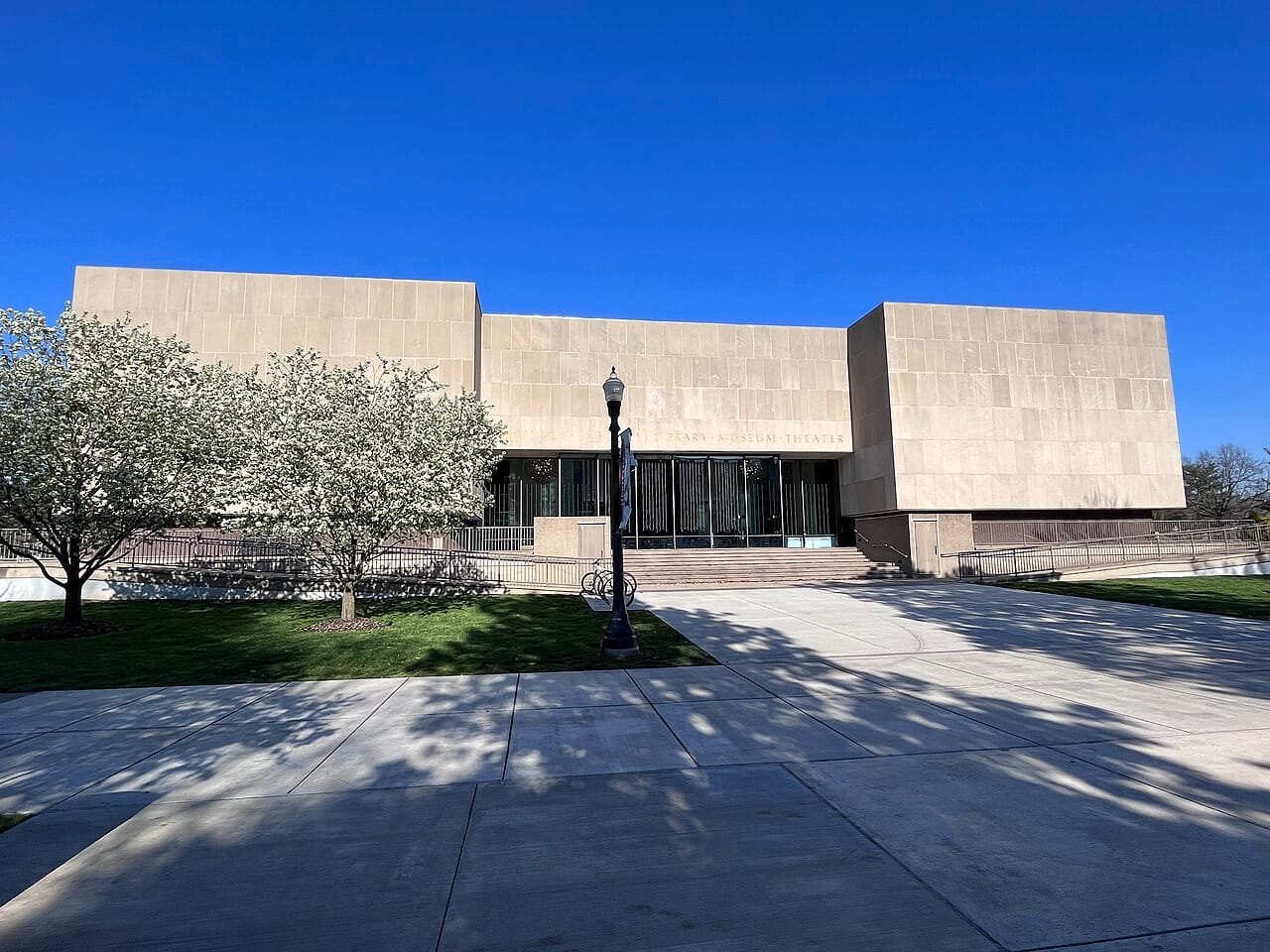
Site Details
Pin location is approximate.
1900 Kanawha Blvd E #435
Charleston, WV 25305
Family Friendly?
Yes
Visitors Per Year
100,000
The museum offers a clearly marked self-guided path that walks visitors through West Virginia’s past in chronological order—from its geological formation and prehistoric creatures through its industrial rise and present-day identity.
In addition to the main walking path, the museum includes 26 separate “discovery rooms,” each with its own theme, focusing on specific areas of West Virginia history. These rooms offer deeper dives into particular topics, providing a more immersive and exploratory learning experience for visitors. The discovery rooms enrich the overall narrative and provide strong educational value for families.
Notable exhibits include:
- A clearly presented timeline of West Virginia statehood during the Civil War. The exhibit explores the complex history of West Virginia’s formation during the Civil War, including the tensions between the eastern and western parts of Virginia. This exhibit also highlights the experiences of soldiers and contains descriptions of Civil War battles.
- Displays on coal mining, including discussion of company towns, labor movements, and social history.
- Accurate contextualization of events like John Brown’s Raid. Brown’s 1859 raid on Harpers Ferry, West Virginia, was an attempt to spark a slave uprising. Although the effort failed, it sharply escalated tensions between the North and South leading up to the Civil War. The museum houses several artifacts from the event.
- Sections on African American and immigrant miners are integrated into the broader labor history.
- A brief but accurate treatment of slavery and women’s rights. The “Changing Roles of Women” Discovery Room contains a full-sized telephone switchboard, as being a telephone operator was one of the first jobs available to women.
- The “Family Farm” exhibit pays tribute to agriculture, family farm life, and the history of Helvetia, a farming community established in Randolph County in 1869 by Swiss immigrants.
The museum offers a chronological, immersive experience that is easy to follow. The visual timeline of West Virginia’s path to statehood is a standout feature, and the mining exhibit offers a well-rounded, inclusive look at the state’s most defining industry. The experience reflects thoughtful design and careful scholarship. A guided tour is available, but it must be booked in advance by phone, making it unlikely that many casual visitors or families get to take advantage of that option.
The museum displays high standards of scholarly accuracy and comprehensiveness. No errors, exaggerations, cherry-picking, or omissions are present. The exhibit on slavery, for example, is concise but factually correct and intellectually honest—free of ideological overreach or emotional manipulation. Similarly, labor and race-related topics are placed in context without politicization. The museum’s tone and narrative style resemble that of a high-quality documentary: steady, impartial, and informative. Each topic is presented within the appropriate historical framework and with fidelity to the historical record.
There is no evidence of presentism, nor any attempt to impose modern social or political values on to historical actors or events. Instead, the museum invites visitors to understand people and events within their own historical context. Overall, the site offers a model of nonpartisan public history.
The museum is family friendly and appropriate for children. While it covers serious subjects such as slavery and labor disputes, the content is presented with maturity, accuracy, and restraint, avoiding graphic detail or ideological framing. The self-guided format makes it easy for families to move at their own pace. No content requires advance warning for families with younger children.
West Virginia’s history is rooted in the dramatic upheaval of the American Civil War. Unlike most of the South, many residents in the mountainous western region of Virginia opposed secession from the Union. When Virginia voted to leave the United States in 1861, delegates from the western counties convened their own constitutional convention and initiated the process of breaking away from Virginia. With the support of the federal government, West Virginia officially became the 35th state in 1863, formed in direct defiance of the Confederacy.
This origin story makes West Virginia unique: It is the only state created by seceding from a Confederate state. Harpers Ferry, a strategic location at the confluence of the Potomac and Shenandoah Rivers, played a key role in this era, not only as a site of conflict but also as the location of John Brown’s famous 1859 raid that helped ignite national tensions over slavery.
Following the war, West Virginia’s economic and cultural identity became closely tied to the coal industry. The rugged terrain of the Appalachian Mountains made large-scale agriculture difficult, but the region was rich in natural resources. As coal mining expanded, it fueled the growth of railroads, towns, and industry, but also brought labor strife, dangerous working conditions, and significant demographic shifts.
While the site excels in presenting West Virginia’s unique story with historical accuracy and balance, it does not engage with the American Founding, the Constitution, or the philosophical underpinnings of our republic. Visitors will not encounter exhibits on the Declaration of Independence, the Federalist debates, the structure of constitutional government, or civic principles such as natural rights, consent of the governed, or the separation of powers. The site is not particularly civic minded in the broader national sense. Rather, it offers a state-focused historical narrative without intentionally linking West Virginia’s development to the Founding ideals that shaped the nation. This is not a distortion or failure of accuracy but is notable for those in search of civic education sites.
Owned By: West Virginia Department of Arts, Culture, and History
Operated By: West Virginia Department of Arts, Culture, and History
Government Funded: Yes
Did you know?
In 1917, due primarily to the coal industry, West Virginia had the nation’s highest percentage of foreign–born workers per capita.
Recommended Reading
- When I Was Young in the Mountains by Cynthia Rylant
- Storming Heaven by Denise Giardina
Reviewed By
Tiffany Hoben
Director of Education Partnerships and Strategy at the Cardinal Institute for West Virginia Policy
The opinions expressed above are those of the Reviewer who is providing a good-faith historical assessment to educate the public. Reasonable opinions can vary, and the Reviewer’s opinion is not necessarily the opinion of The Heritage Foundation or its affiliates.