Pabst Mansion
Historic house museum in Milwaukee showcasing the late 19th-century home of Captain Frederick Pabst, a German immigrant who became a prominent beer industry magnate
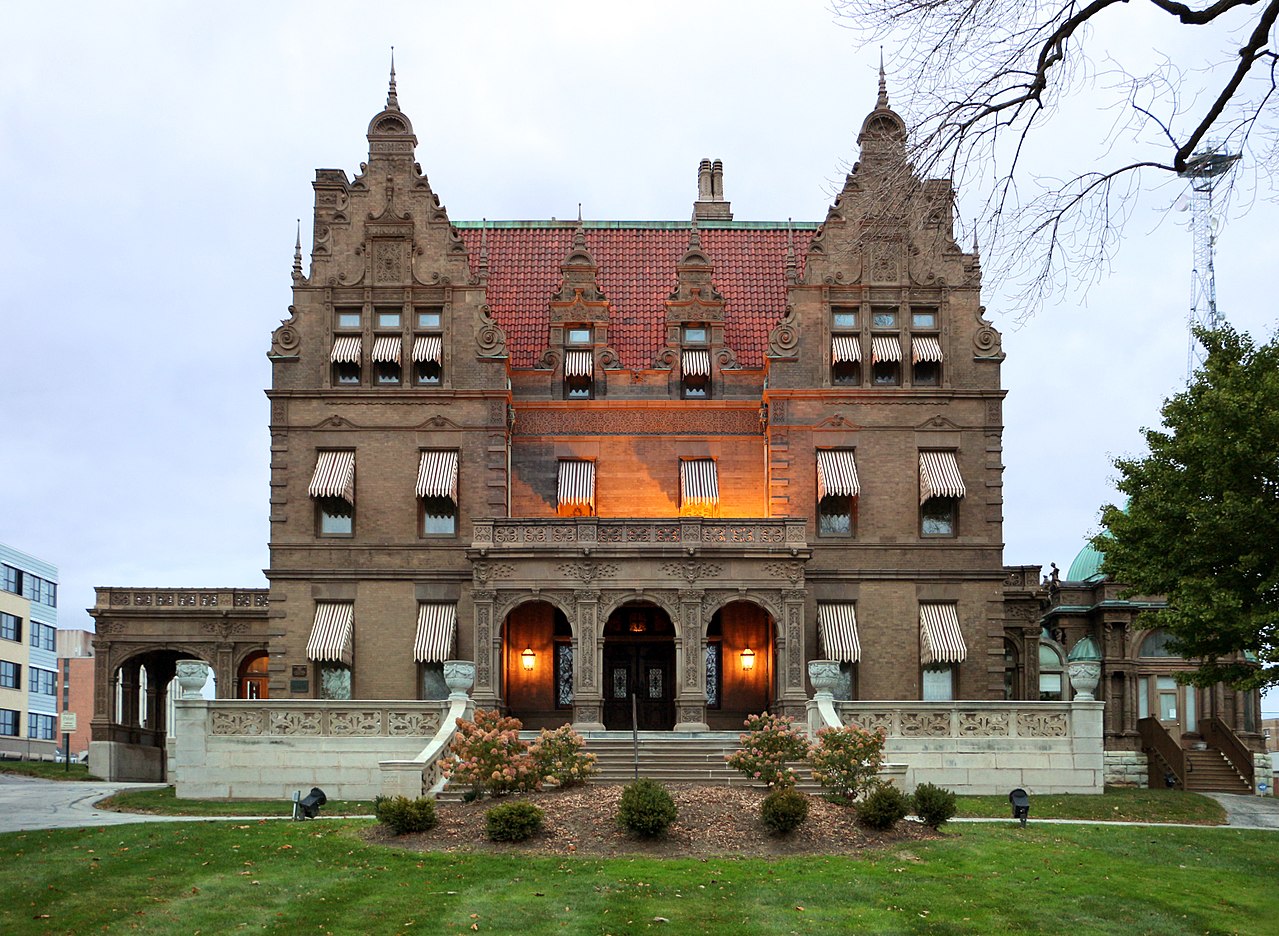
Site Details
Pin location is approximate.
2000 W Wisconsin Ave
Milwaukee, WI 53233
Family Friendly?
Yes
Visitors Per Year
45,000
- Guided Tours: Docents lead 60-minute tours in which visitors learn about the Pabst family and the history and architecture of their mansion. The first through third floors are open to visitors.
- Self-guided Tours: Visitors can explore the Pabst Mansion at their own pace with a self-guided packet. Docents are available in the exhibition spaces to answer questions.
- Christmas at the Pabst Mansion (November–January): Families can enjoy self-guided holiday tours in which each room is decorated for the season.
- Other Tours (see website for additional information):
- Sunday Mimosa Tours
- Blue Ribbon Happy Hour Tours
- Family-friendly Guided Tours
- Behind-the-Scenes Tours (May–September)
- Women of the Pabst Mansion (select dates in March)
- Floral Reflections: Ikebana at the Pabst Mansion (one weekend in May)
- Oktoberfest at the Pabst Mansion (select dates in September)
- Illuminating the Dark (select dates in October)
- Father Christmas at the Pabst Mansion (Sundays in December)
There are a handful of short videos on loop at the Visitors’ Center providing background on the family, the mansion, and the brewery.
The tours give a complete and accurate account of the family and the mansion, and the place that both hold in the history of Milwaukee. While the family does not maintain direct oversight of the mansion, the descendants of Captain Frederick and Maria Pabst continue to have some involvement in the museum, contributing furniture and paintings from time to time to restore the mansion to its original glory.
There is no ideological bias evident in the tours of Pabst Mansion.
The Pabst Mansion has a little for everyone. The basic guided tour focuses solely on the historic and artistic significance of the house, but it tends to run long for younger kids, and the setting—filled with antiques—requires careful behavior. For families with kids, the Saturday morning half-hour family-friendly guided tour may be a better choice. Christmas at the Pabst Mansion is a local tradition for thousands of families and a must-see for Milwaukee visitors. Other tours, such as Mimosa Sundays, Pabst Blue Ribbon Happy Hour, or Illuminating the Dark Tours in October, are not family-friendly, but offer a range of options for older kids or parents looking for an evening out.
The Pabst family helped shape Milwaukee’s economy, as well as the nation’s economy. The Pabst Mansion is significant for several reasons:
- First, as the home of Captain Frederick Pabst, a German immigrant, the mansion tells the story of how first-generation immigrants could rise from cabin boy to ship captain to commercial magnate, all in just one lifespan.
- Second, the mansion offers a glimpse into the art, architecture, and craftmanship of the late 19th century—a time when America was learning how to portray itself on the world stage in the wake of the 1893 Columbian Exposition (which celebrated the 400th anniversary of Columbus’s discovery of the Americas) in Chicago.
- Third, the mansion offers a view of the changing demographics of a former Rust Belt city. The home, once located in Milwaukee’s most affluent neighborhood, later became the Archbishop’s residence—saving it from the wrecking ball—before being purchased in the 1970s by a group of concerned citizens who have lovingly restored it over the past 50 years.
Owned By: Captain Frederick Pabst Mansion, Inc.
Operated By: Captain Frederick Pabst Mansion, Inc.
Government Funded: Yes
Did you know?
The Pabst Mansion was nearly torn down to become a parking lot for a neighboring hotel.
Recommended Reading
- The Pabst Brewing Company: The History of an American Business by Thomas C. Cochran
- The Captain Frederick Pabst Mansion: An Illustrated History by John C. Eastberg
Reviewed By
Peter Budnik
Principal Architect at Domus Architecture
The opinions expressed above are those of the Reviewer who is providing a good-faith historical assessment to educate the public. Reasonable opinions can vary, and the Reviewer’s opinion is not necessarily the opinion of The Heritage Foundation or its affiliates.