Fort Vancouver National Historical Site
Fort central to development of the Pacific Northwest and site of early military aviation at Pearson Field
Site Details
Pin location is approximate.
1501 E Evergreen Blvd
Vancouver, WA 98661
Family Friendly?
Yes
Visitors Per Year
1,007,750
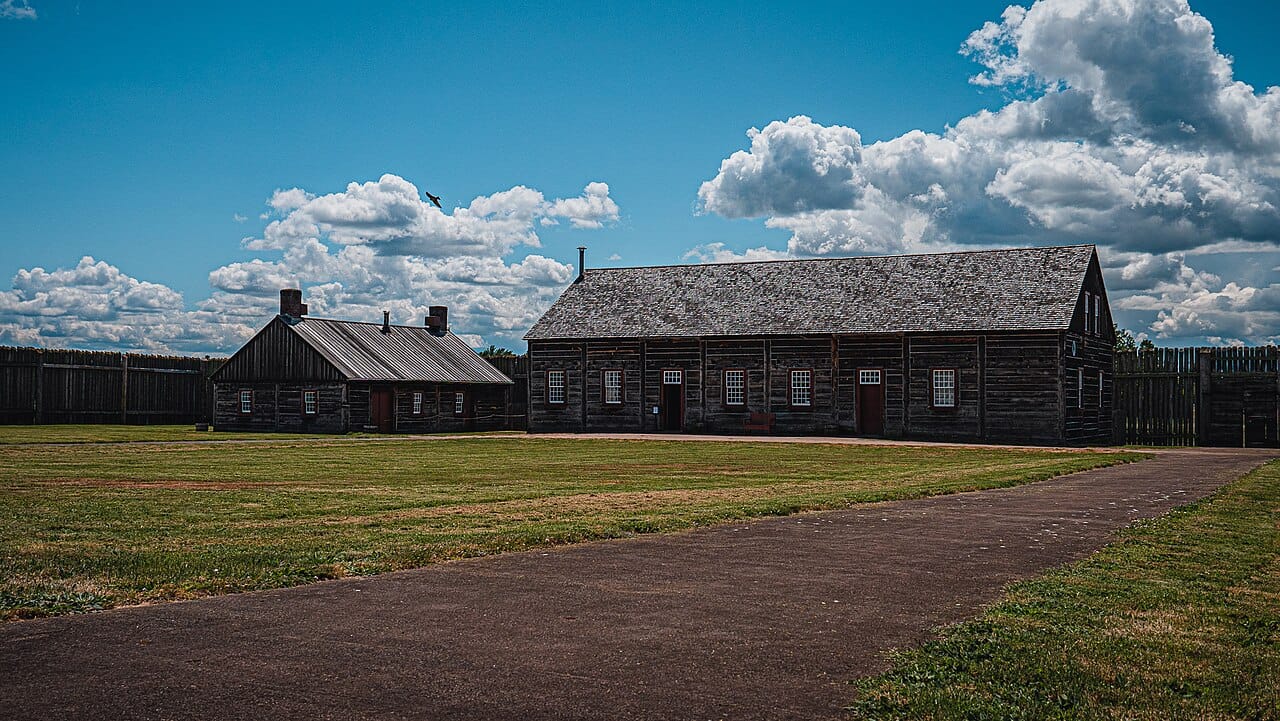
The Visitors’ Center has a 15-minute film that provides a good overview of the Hudson’s Bay Company and the early history of Fort Vancouver, and a small museum with informative signs and a few replica artifacts. These help visitors understand the importance of the fur trade in the 18th and early 19th centuries. The central attraction is the reproduction of Fort Vancouver as it appeared in 1845.
- Within the walls of the fort are period buildings, including a bake house, blacksmith shop, carpenter shop, kitchen, and the Chief Factor’s House. Select buildings are open to the public as determined by the Park Service. Visitors come away with a much better appreciation for what life was like in the 19th century.
- A short walk from the fort is the Pearson Air Museum, a small facility that has a replica early American aircraft, a movie, and information on the Army’s Spruce Production Division, an Army unit founded in 1917 to produce Sitka spruce timber needed to make military aircraft for World War I.
The Visitors’ Center and Pearson Air Museum are accurate and fair, as were the displays in both buildings. Park rangers can answer questions about, for example, cooking in the 1840s, but the presentations are far from comprehensive accounts of what life would have been like in the fort in the 1840s.
There is no apparent ideological bias at the site.
A family with children could easily spend two to three hours between the three facilities. There is plenty of space for children to run around. However, the fort itself isn’t particularly interesting for younger visitors, and sometimes there are few interpretive rangers on site.
Fort Vancouver was managed by Dr. John McLoughlin from 1824 to 1845. Because he encouraged Americans to settle south of the fort in present day Oregon, he has become known as the Father of Oregon. In 1846, he left the fort for Oregon City, Oregon. His home there, which is also managed by the National Park Service, is open to the public. It is a 30-to-60-minute drive from Fort Vancouver, depending on traffic.
Built in the winter of 1824–1825, Fort Vancouver was the headquarters of the Hudson’s Bay Company’s Columbia Department. It was a major center of the Pacific Northwest fur trade. After Great Britain and the United States settled the current boundary between Canada and America in 1846, the U.S. army established a presence there in 1849. This presence eventually grew to become a major military facility known as Vancouver Barracks. In 1925, the army established Pearson Field at the post, which played an important role in the development of American military aviation. Vancouver Barracks ceased to be a military facility in 2012.
Owned By: The National Park Service
Operated By: The National Park Service
Government Funded: Yes
Did you know?
John McLoughlin was born in Canada and was Fort Vancouver’s Chief Factor (manager) from 1824 to 1845. Contrary to orders, he helped Americans who came across the Oregon Trail settle in what is today the state of Oregon. In 1846, he moved to Oregon, and in 1851, he became an American citizen. He is known as the “Father of Oregon.”
Recommended Reading
- The Company: The Rise and Fall of the Hudson’s Bay Empire by Stephen Brown
- Empire of the Bay: The Company of Adventurers that Seized a Continent by Peter Newman
- Frontier Forts and Posts of the Hudson’s Bay Company by Kenneth E. Perry
- Young Mac of Fort Vancouver by Mary Jane Carr
Reviewed By
Mark David Hall
Professor in the Robertson School of Government at Regent University
The opinions expressed above are those of the Reviewer who is providing a good-faith historical assessment to educate the public. Reasonable opinions can vary, and the Reviewer’s opinion is not necessarily the opinion of The Heritage Foundation or its affiliates.