San Jacinto Museum and Battlefield
Site of the decisive 1836 Battle of San Jacinto, securing Texas independence from Mexico
Site Details
Pin location is approximate.
3523 Independence Pkwy
La Porte, TX 77571
Family Friendly?
Yes
Visitors Per Year
200,000
The San Jacinto Museum is self-paced and can take anywhere from 20 minutes to an hour to complete. The exhibit covers the development of the State of Texas, beginning with early Spanish exploration to its statehood. There is one additional display that shares the history of the monument’s construction in the 1900s.
Visitors can watch the film, Texas Forever!! The Battle of San Jacinto, an entertaining 35-minute overview of the Texas Revolution, with shows every hour. The film portrays Texas’ grievances with Mexico, its early battles, and finally its victory at San Jacinto. Texas heroes are treated fairly, and their achievements are properly acknowledged.
Families can ride an elevator up to the monument’s observation deck, which overlooks part of the battleground and the Houston Ship Channel.
Although a tour is not offered for the interior exhibit, the site does offer a battlefield van tour, but only 14 seats are available. The guides are generally knowledgeable about Texas history and good with kids. These tours typically last about an hour but vary with each new group of visitors. Families not only get to see the positions held by Texans and the Mexican Army at different points of the battle, but can hold artifacts, like a short-barreled replica musket or a powder flask.
The Museum and Battleground offers many additional family activities. A few of these include: “Bird Watching at the battleground,” “Family Day” (kids are admitted for free, once a month), “Demo Day” (an interactive event showcasing what life was like during the time of the Texas Revolution), “Picture Yourself at San Jacinto” (free family photos included with the purchase of a museum ticket).
The San Jacinto Museum and Battleground is also home to the Albert and Ethel Herzstein Library, which boasts “more rare books per square foot than the Smithsonian Museum in Washington D.C.,” according to its website. Appointments must be made in advance.
The museum disproportionately represents the indigenous people by praising them for their advanced technology and culture, while failing to mention the civilization’s atrocities, such as ritual human sacrifice. One panel says that Diego de Landa, a Spanish Franciscan priest and bishop, burned over 40 Mayan books. This could be slightly misleading for readers, since the actual number is not agreed on by historians, and Landa himself reportedly admitted to burning 27 books. Since these misrepresentations were displayed on what appear to be 4 x 6 index cards in 12–point font, most visitors, especially children, may not notice them at all.
The San Jacinto Museum does not have a bias toward a certain ideology. The instances in which information is disproportionate or misleading are few and far between. Overall, the San Jacinto Museum accurately represents the different stages of Texas’ road to statehood.
When viewing Texas Forever!! The Battle of San Jacinto, families with younger children may want to sit toward the back of the auditorium where the volume is not as loud. The passenger van ride is only offered in the afternoons and has limited space. Larger families should ask to be added to the passenger list as soon as they arrive.
The Texas Revolution began in the fall of 1835. Texans were concerned about the growing power of the military dictator of Mexico, General Santa Anna. The repeal of the 1824 Constitution of Mexico in 1835 became for many Texans the last straw. That same year, the Mexican army tried to take the city of Gonzales’ cannon. The people refused to give it up, and flew the iconic flag “Come and Take It” in protest. The Texas revolution had begun.
Leading up to San Jacinto were many other conflicts, the most significant of which were the Battle of the Alamo and the Goliad Massacre. The Texans defended the Alamo for 13 days before Mexico gained control of the old mission and executed all survivors. Near the City of Goliad, about 350 Texas soldiers surrendered to Mexico. When word reached Santa Anna, he ordered the execution of them all, and had their bodies burned.
The San Jacinto Museum is on the battlefield of the last fight in the Texas Revolution. After the Goliad Massacre and the Battle of the Alamo, the Texas army was ready to engage General Antonio López de Santa Anna and his men. The fields of tall grass and marshy swampland near the San Jacinto Bay and Buffalo Bayou were the right conditions for the Texas General, Sam Houston. On April 21, 1836, Houston attacked the Mexican forces in a confrontation that lasted only 18 minutes.
It was at the Battle of San Jacinto that the Texans gave the famous cry, “Remember the Alamo! Remember Goliad!” It was there that Texans stood up to the tyrannical government of Mexico and secured liberty for themselves and their posterity.
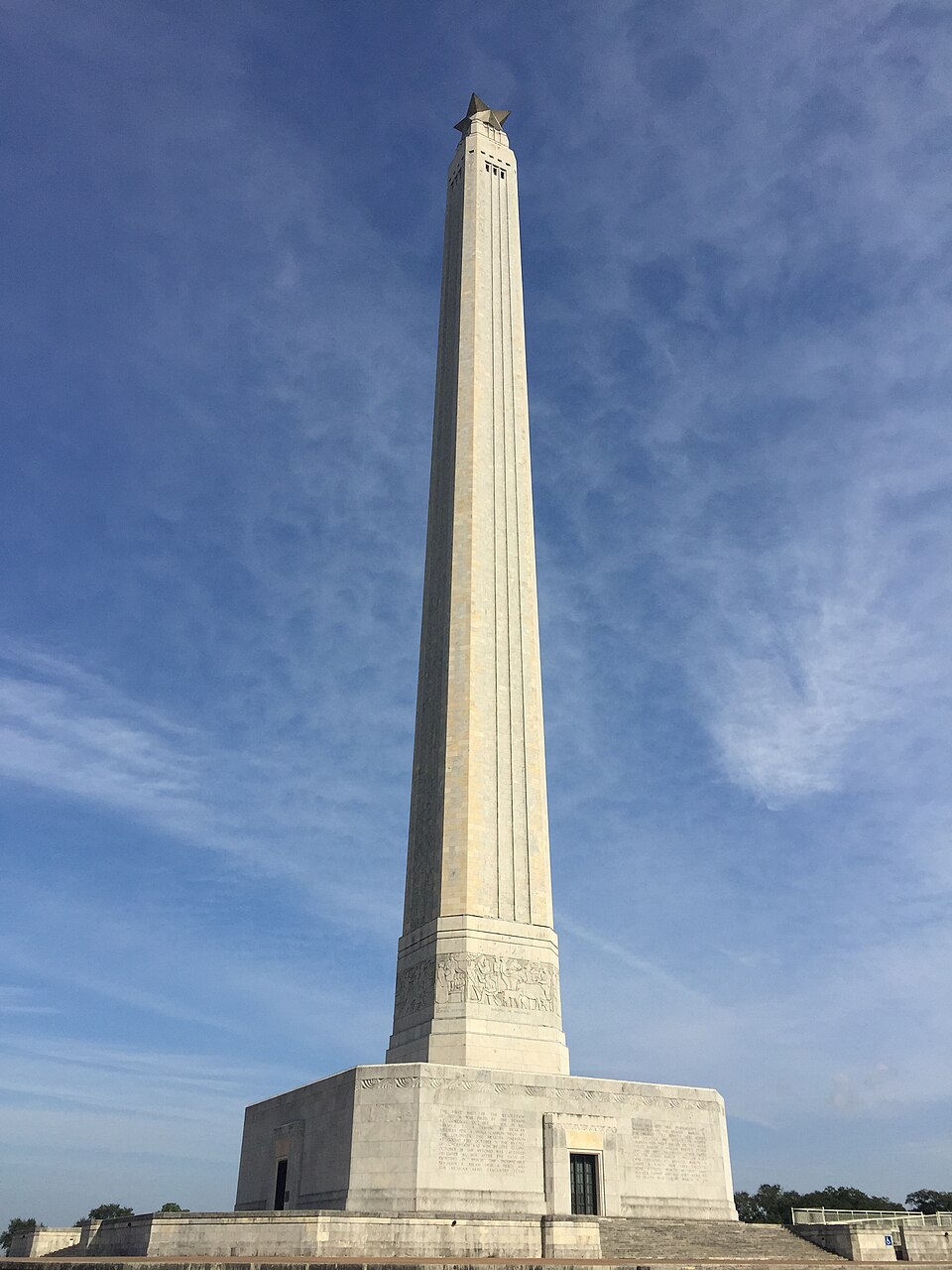
The battlefield, outside of Houston, Texas, is also the site of the San Jacinto Monument. The 567-foot-tall pillar was a gift from the State of Texas and the federal government to commemorate the 100th anniversary of the Lone Star State in 1936. The monument was finished in 1939 and today remains a symbol to all Americans of the ideals we stand and fight for.
Owned By: Texas Historical Commission and San Jacinto Museum Battlefield Association
Operated By: Texas Historical Commission and San Jacinto Museum Battlefield Association
Government Funded: Yes
Did you know?
The San Jacinto Monument is taller than the Washington Monument in Washington, D.C., by about 15 feet.
Recommended Reading
- Lone Star: A History of Texas and the Texans by T. R. Fehrenbach
- the Texas Constitution
- the Texas Declaration of Independence
Reviewed By
Georgia Page
Native Texan and former policy intern at the Texas Public Policy Foundation
The opinions expressed above are those of the Reviewer who is providing a good-faith historical assessment to educate the public. Reasonable opinions can vary, and the Reviewer’s opinion is not necessarily the opinion of The Heritage Foundation or its affiliates.