Andrew Jackson’s Hermitage
Family home of President Andrew Jackson
Site Details
Pin location is approximate.
4580 Rachels Ln
Hermitage, TN 37076
Family Friendly?
Yes
Visitors Per Year
230,000
Upon arrival, guests are invited to watch an introductory video of about 15 minutes. Authorities interviewed include journalist Steve Inskeep, historian and biographer Jon Meacham, and historian Harry Watson. This video sets up the major themes of how the site treats Jackson, which are:
- That he was a pioneering example of the American dream, rising from humble beginnings to become President. “No one had ever climbed a ladder like that,” says one historian. “It’s not clear anyone knew that such a ladder existed.”
- That he steered the country through an exceptionally tense period during the nullification crisis, buying time at a critical moment before the outbreak of the civil war later in the century.
- That he was an enormously lively and polarizing figure whose courage was unquestionable but whose passions could be violent. This is where criticisms of Jackson, including his possession of slaves, become prominent.
The museum features documents, possessions, and clothing from Jackson’s life, displayed in relatively straightforward chronological order, all of which takes about 40 minutes to walk through. There is an audio tour available that can be accessed online for those who want to preview the material.
Guests are free to roam about the extensive grounds and explore some other exhibits, including a small cemetery and the slave quarters.
The tour of the house itself lasts about 30 minutes. Guests start at a scheduled time and are taken past each room by a docent. This part is less political and more personal, touching on Jackson’s family relationships, his personal habits, his tastes, and his legacy. It is richly detailed and clearly presented with a lot of affection for Jackson. Particularly fascinating are the huge bound volumes of daily newspapers he kept in his study, the modern-day equivalent of which might be a room full of TVs playing news 24/7.
The museum tour is roughly arrayed in chronological order, though its layout is a bit haphazard and can sometimes feel confusing.
The museum is free of any egregious historical errors. The claim made several times that “the slavery system allowed Jackson’s agriculture plan to be successful” is a little tendentious and seems to depend on the widely debunked idea that slavery was a powerhouse of the South’s economy rather than a drain on it. The question of whether Jackson could have run his farm without slaves is never addressed and hardly makes sense to ask. But it’s fair to say that slave labor was a major part of life at The Hermitage, and the site acknowledges this fact without making it the primary focus.
There is a second video playing in the room that deals most extensively with Jackson’s time in the presidency. This veers somewhat unnecessarily into further discussion of Jackson’s character flaws, but it also features quotes encouraging visitors not to judge Jackson too hastily or by the standards of the present. “Historians tread on dangerous territory when they tell you what people should approve of,” says one expert. “Once you get to those moral judgments, really historians are not specially qualified to make those.” Whether or not that’s true, it underscores the site’s repeated message that Jackson shouldn’t be thoughtlessly condemned.
On balance, the site does a very good job presenting the complexities of Jackson’s character without obsessing over them or minimizing his very real achievements. That said, the Hermitage does, in fact, have a rather extensive and interesting history of slavery, including considerable archival material and records from conversations with descendants of slaves. During “Black History Month,” this history was somewhat needlessly re-emphasized with a temporary exhibit in one of the hallways, and repeated use of the term “enslaved” did hint at a sanctimonious ideological outlook.
The worst scolding happens outside, in the signage around the quarters where slaves lived and worked (“Without the grueling labor of these individuals, the Jackson family could not have lived so lavishly”—probably true, but a little too frequently and too pompously emphasized). For the most part, though, the (genuinely worthwhile) historical materials in this arena are preserved and presented tastefully without taking away from the main subject of interest. The website gives a fairly good flavor for how the matter is treated.
Also, while it’s fair to engage with the moral difficulties of Jackson’s involvement with the Trail of Tears and to note his relatively callous attitude toward Native Americans by modern standards, the site could do a better job of addressing the real dilemma that the states faced during Jackson’s tenure by explaining that resettlement happened in the context of a genuine negotiation over how to accommodate the presence of a conquered people (the Native Americans) in an expanding country.
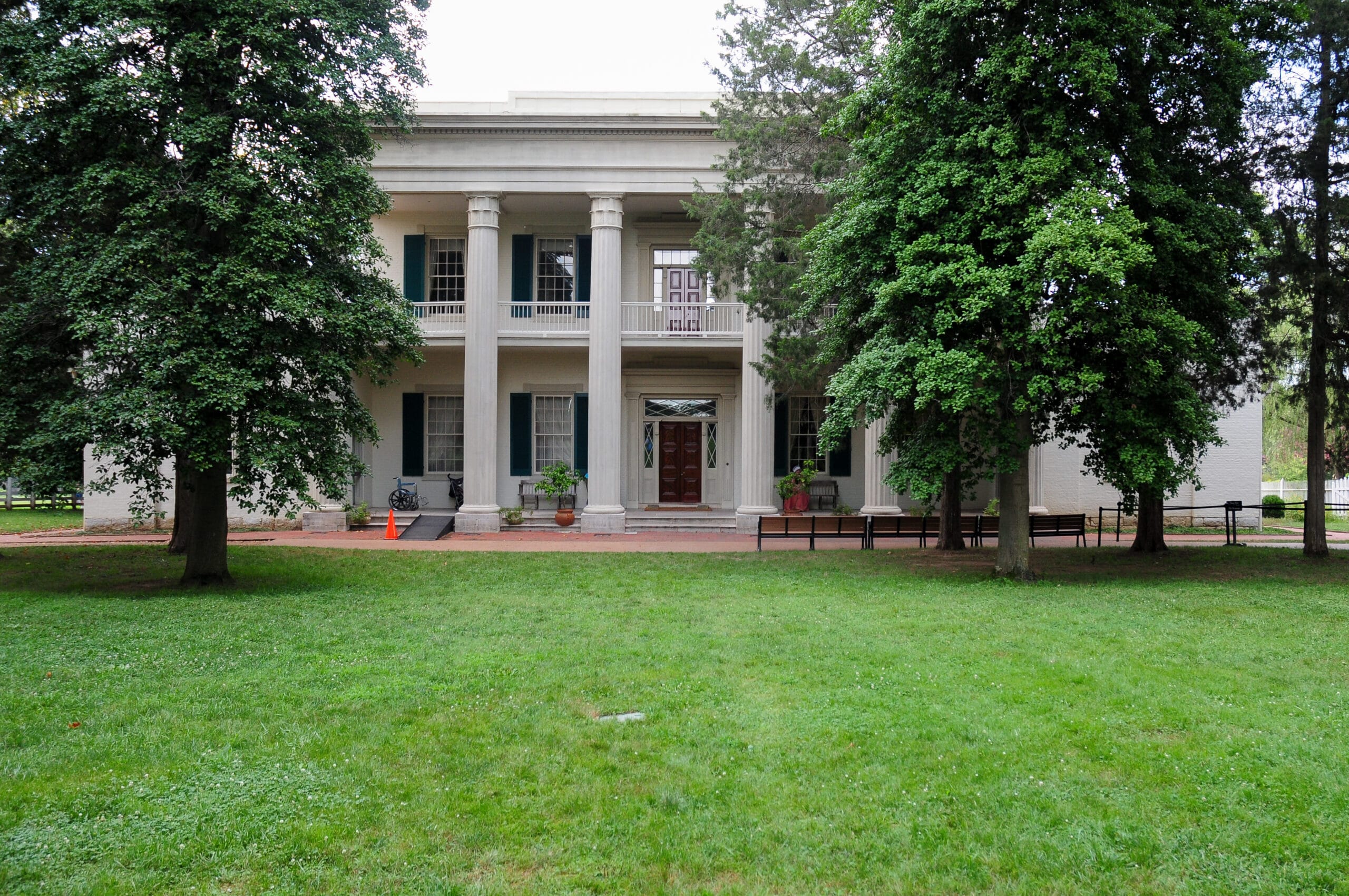
The Hermitage is a large plantation northeast of downtown Nashville. The area around it is unremarkable, but the space itself is beautiful. Its grounds are expansive; there is plenty of space for children to explore and play. The museum may be a little stuffy for younger children in some areas, and the video materials are aimed at older audiences, but there is nothing inappropriate and there are several interactive areas aimed at kids. Jackson is a colorful and entertaining character, and the site makes good use of the engaging stories from his life.
The centerpiece of the experience is the house itself, a stately neo-classical mansion decorated gorgeously (and somewhat eccentrically) inside. A highlight is the lush wallpaper depicting scenes from ancient Greece. The tour requires visitors to tread a little carefully, so younger kids may need to be watched, but it is not long or dry enough to bore them too badly. There is a café (with wine tasting for parents!) and a gift shop.
Andrew Jackson was the son of Scots-Irish colonists from Ulster, Ireland. He was born before the American Revolution and grew up in the rough culture of the backcountry frontier; he carried off his wife, Rachel Donelson, from an unhappy marriage before she was technically divorced. He became a national hero through his extraordinary bravery in the War of 1812, in which he triumphed at New Orleans and earned the nickname “Old Hickory.”
He rode this popular support to a two-term presidency from 1829 to 1837. Tragically, the stress of a smear campaign against Rachel’s character during the first election contributed to her death from a heart attack before Andrew ever took office. Once installed, he presided over the resettlement of Native tribes to new land west of the Mississippi (including in the so-called “Trail of Tears”). But the defining moment of his presidency came because South Carolina, secretly led by Vice President John C. Calhoun, had asserted its right to “nullify” or cancel a tariff considered unfair to the South’s agrarian economy. Jackson negotiated a compromise while also firmly insisting on, and asking Congress to validate, his right to use force against states that threatened nullification.
It was a sure-footed response that probably preserved the union for another 30 years. “Without union, our independence and liberty would never have been achieved,” said Jackson; “without union, they can never be maintained.” He died of heart failure in 1845 and was buried alongside Rachel.
Owned By: Andrew Jackson Foundation (formerly the Ladies’ Hermitage Association)
Operated By: Andrew Jackson Foundation (formerly the Ladies’ Hermitage Association)
Government Funded: No
Did you know?
Jackson’s funeral was disturbed when his beloved parrot, Poll, “got excited and commenced swearing so loud and long as to disturb the people and had to be carried from the house.”
Recommended Reading
- Andrew Jackson (1977-84) by Robert Remini; Allen C. Guelzo
- “King Mob,” The Claremont Review of Books (Fall 2022)
- The President’s Lady (1953) directed by Henry Levin, screenplay by John Patrick and Irving Stone
Reviewed By
Spencer Klavan
Associate Editor of the Claremont Review of Books
The opinions expressed above are those of the Reviewer who is providing a good-faith historical assessment to educate the public. Reasonable opinions can vary, and the Reviewer’s opinion is not necessarily the opinion of The Heritage Foundation or its affiliates.