Sequoyah’s Cabin Museum
Cabin built by Sequoyah, creator of the Cherokee writing system, in 1829, where he lived until his death in 1842
Site Details
Pin location is approximate.
470288 OK-101
Sallisaw, OK 74955
Family Friendly?
Yes
Visitors Per Year
5,000 - 10,000
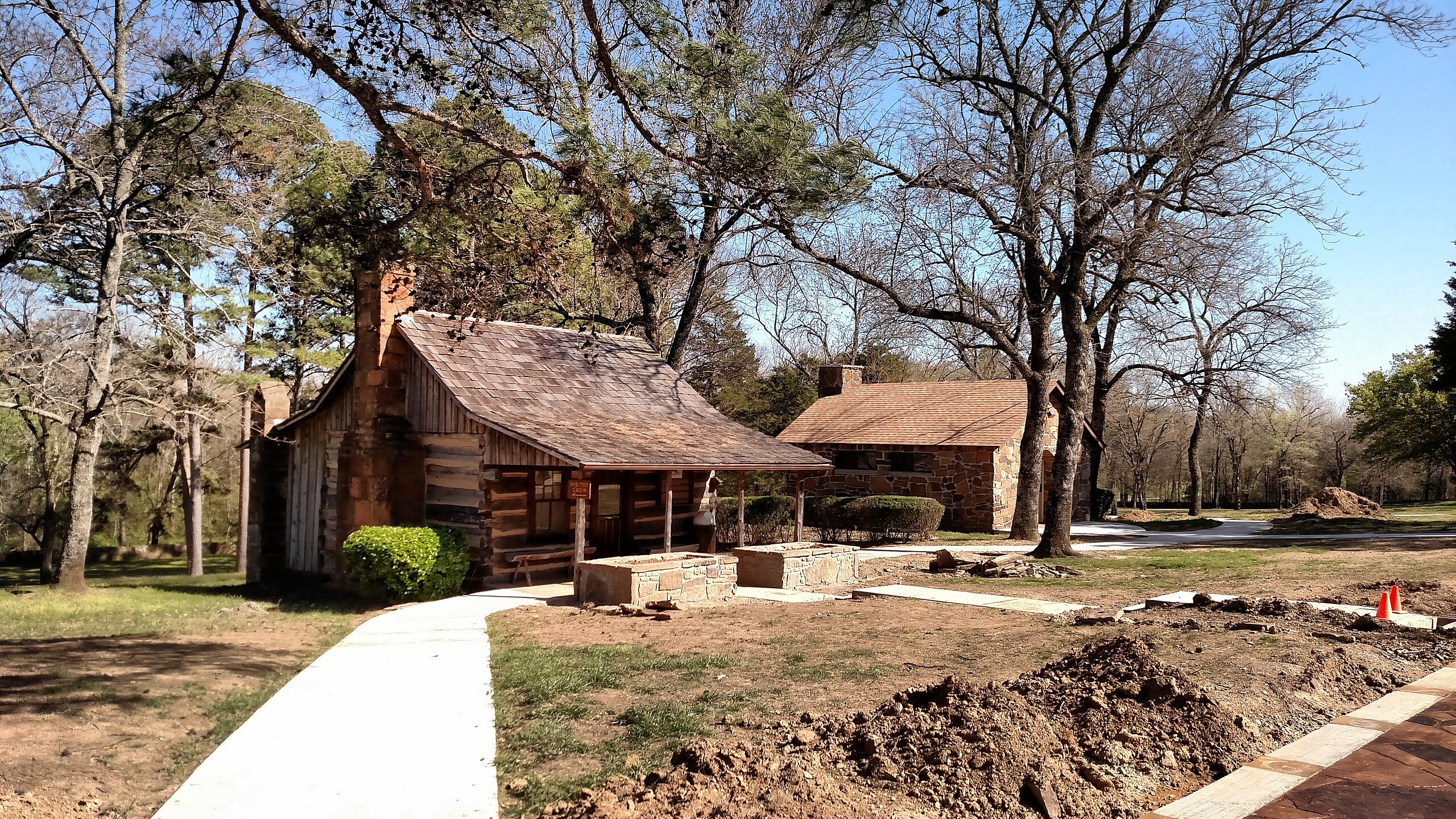
The site sits on 10 acres in rural eastern Oklahoma. The grounds consist of a series of buildings connected by paved walkways, along with large grassy lawns and trees with some picnic tables and park benches. The grounds are very well maintained, as are the buildings. The primary buildings on the campus include a Visitors’ Center with a gift shop, a building with restrooms, and the museum/ cabin building. The site also holds a few historic buildings built by the Works Progress Administration (WPA) during the Great Depression in the 1930s. Another historic cabin was recently relocated to the grounds and is estimated to be open for tourists near the start of 2026.
The primary attraction of the site, the cabin built by Sequoyah himself in 1829, is located inside the museum building for protection from the elements. Visitors can step inside his cabin to view the interior. The museum contains artifacts and information panels covering Sequoyah’s life, legacy, and the history of the syllabary he created. The exhibits cover Sequoyah’s service in the War of 1812 and his work unifying the tribe following tensions surrounding the Cherokee removal from the southeast. It also provides a history of the syllabary itself: its development, basic structure, impact on the Cherokee tribe, and even the modern resurgence of the language in more recent times.
Other portions of the exhibits deal with the Cherokee tribe’s culture and heritage and the modern role they play in their lands in Oklahoma, touching on the tribe’s heritage, preservation, community, and infrastructure. There is also a children’s section, with hands-on activities related to Sequoyah and the Cherokee tribe.
Tours are primarily advertised as being for large groups, but the staff members on site are very accommodating and will provide tours for smaller groups or individuals. Tours should be reserved through the website or by phone. The guides are not given a script; they tailor their tours to the group, as well as to the interests and questions that arise during the tour. Also, employees at the site are required to complete a short course that covers Cherokee history and heritage.
The depth and amount of information provided by a relatively small museum exhibit are impressive, despite a few minor discrepancies regarding the timeline of specific events in Sequoyah’s life. (For example, several information panels provide different years regarding when he moved from place to place.)
There is also a minor lack of specifics about some of the details regarding his life. For example, throughout his entire life, Sequoyah walked with a limp (hence his popularly depicted cane), but this fact is nowhere discussed. However, it is important to note that the staff on site are friendly and ready to answer questions.
The site succeeds in covering a period of American history that is too often warped by modern biases. Topics such as the Trail of Tears, Andrew Jackson, and other government actions such as the Dawes Act (the breaking up of community–held tribal land) are presented, and their negative effects on the tribes explained, but the information in the museum does not contain blatant opinion-based language or modern political motives. The focus of the information in the museum is on celebrating the advances and triumphs of Sequoyah, his work, and the Cherokee tribe.
Sequoyah’s cabin, museum, and surrounding grounds are very family friendly. The museum contains a section that is specifically geared towards children. There are puzzles, games, coloring pages, and activities pertinent to Sequoyah and his cabin. However, there were some books in the children’s section that appear to blend Native American religion with Christian religious principles, which—in addition to not being very relevant to the history of the location—risks causing confusion. However, that area can be easily avoided and makes up a minor part of the general location.
Sequoyah, also known as George Guess, was born around 1775 and died around 1843. He is best known for being the creator of a written form of communication for his native Cherokee language, called the Cherokee syllabary, which served as a pivotal tool in the advancement of the tribe. It was tedious work and took roughly 12 years to complete. Within just a few years of its completion, the Cherokees had established a written constitution, a supreme court, and a newspaper. That newspaper, called the Cherokee Phoenix, is still in circulation. Sequoyah’s invention helped propel the advancement and modernization of the tribe, giving it the tools necessary to further secure and promote the Cherokees’ unique identity, history, and culture.
Beyond inventing the Cherokee syllabary, Sequoyah was a businessman and veteran of the War of 1812. He is also known for helping to settle disputes and unite the Cherokee nation following forced removal from the southeastern United States. During the period of Indian Removal (1820s–1830s), the tribe divided: Some resisted U.S. efforts to remove them and stayed in their homes, while others negotiated favorable deals with the U.S. for new land, resources, and money and moved west. Eventually, the Cherokee who remained were forced to relocate to the West, an effort now known as the Trail of Tears. The newly arrived Cherokees had to share the land with the group that had already brokered deals with the U.S. government, viewed as treasonous by the arriving Cherokees. It was in this setting that Sequoyah (who himself had moved west prior to the forced removal) helped ease tensions between the two groups and helped reunite them in their new home.
Sequoyah remains a prominent figure and symbol of Native Americans, especially among the people of Oklahoma and specifically the Cherokee. His story and his life are an exemplary display of hard work, innovation, and dedication to the betterment of his people and community.
Owned By: The Cherokee Nation
Operated By: Cherokee Nation Department of Tourism & Department of Business
Government Funded: Yes
Did you know?
Sequoyah’s invention of a written language is called a “syllabary” as opposed to an “alphabet” because, instead of using individual letters, the system he created used symbols to represent the different syllable sounds in the spoken Cherokee language.
Recommended Reading
- Sequoyah by Grant Foreman
- Cherokee Nation: A History of Survival, Self-Determination, and Identity by Drs. Bob Blackburn, Duane King, and Neil Morton
Reviewed By
Camden Roberts
former Director of Operations for the Red River Institute of History and current student at Oklahoma State University, studying History and Political Science
The opinions expressed above are those of the Reviewer who is providing a good-faith historical assessment to educate the public. Reasonable opinions can vary, and the Reviewer’s opinion is not necessarily the opinion of The Heritage Foundation or its affiliates.