William Howard Taft National Historic Site
Birthplace and boyhood home of the only person to serve as both President and Chief Justice of the Supreme Court
Site Details
Pin location is approximate.
2038 Auburn Ave
Cincinnati, OH 45219
Family Friendly?
Yes
Visitors Per Year
20,000
In the Taft Education Center, a 15-minute video introduces visitors to the home on Auburn Avenue, “Cincinnati’s Fifth Avenue,” and William Howard Taft’s life. It briefly covers his childhood, education, and marriage to Helen “Nellie” Herron—as well as his roles as a judge on the Sixth Circuit Court of Appeals, civil governor of the Philippines, Secretary of War under Theodore Roosevelt, President, constitutional law professor, and Chief Justice of the U.S. Supreme Court. The video emphasizes his integrity, honesty, and steadiness during the turbulent and often corrupt years of the Gilded Age and the Progressive Era.
A 30- to 60-minute tour of the house takes visitors through the historically furnished rooms on the first floor, including the front hall, nursery, library, and parlor. Park Rangers may highlight the influence of William’s parents, Alphonso and Louise, on their children’s character, and the political ambitions of William’s wife, Nellie.
Visitors may then take a self-guided tour of the exhibits throughout the rest of the home, on topics ranging from Alphonso Taft’s legal and political career; William Howard Taft’s early life (including his education, marriage, and family); his position as Secretary of War; his presidency and conflict with his predecessor, Theodore Roosevelt, in the 1912 presidential election; and his tenure as Chief Justice of the Supreme Court.
Overall, the exhibits at the William Howard Taft National Historical site are remarkably comprehensive.
- According to the exhibit on his presidency, Taft was an “uncomfortable politician” who failed to complete Theodore Roosevelt’s political agenda and to hold together the conservative and progressive wings of the Republican Party. While it is true that Taft did not “play to the gallery” in the same way Roosevelt did, the exhibit slightly downplays Taft’s success in protecting and even expanding Roosevelt’s efforts in trust-busting, land conservation, regulating the railroads, and (something Roosevelt did not dare to attempt) reducing tariffs.
- The exhibit on the 1912 election concisely and ably displays Taft’s view about the stakes of the contest between Theodore Roosevelt’s radical “New Nationalism” platform and Taft’s “more limited view” of the federal government’s powers under the Constitution.
- The exhibit on Taft’s tenure as Chief Justice accurately depicts his attempt to build consensus on the Supreme Court. It also highlights his role in lobbying Congress to pass the Judiciary Act of 1925, a significant reform that empowered the Court with the discretion to determine which cases it would hear. This freed the Court to focus on important constitutional issues rather than mundane legal questions. The exhibit does not, however, mention the judicial opinion Taft himself thought was his most important: Myers v. United States (1926), in which the Court upheld the power of the President to unilaterally remove executive officers.
- The curators of the William Howard Taft National Historic Site should also be praised for highlighting Taft’s life of integrity and service rather than something as superficial as his weight. Taft was a stout man who gained about 75 lbs. during his presidency (perhaps in response to the great stress of his responsibilities)—but lost that weight within a year of leaving office.
The video, tour, and exhibits correctly present William Howard Taft as a dedicated public servant to the city of Cincinnati, the state of Ohio, the Philippines, and the United States. The video and historical exhibits show Taft’s politics as more “conservative” than those of his predecessor, Theodore Roosevelt, but do so in a non-ideological way.
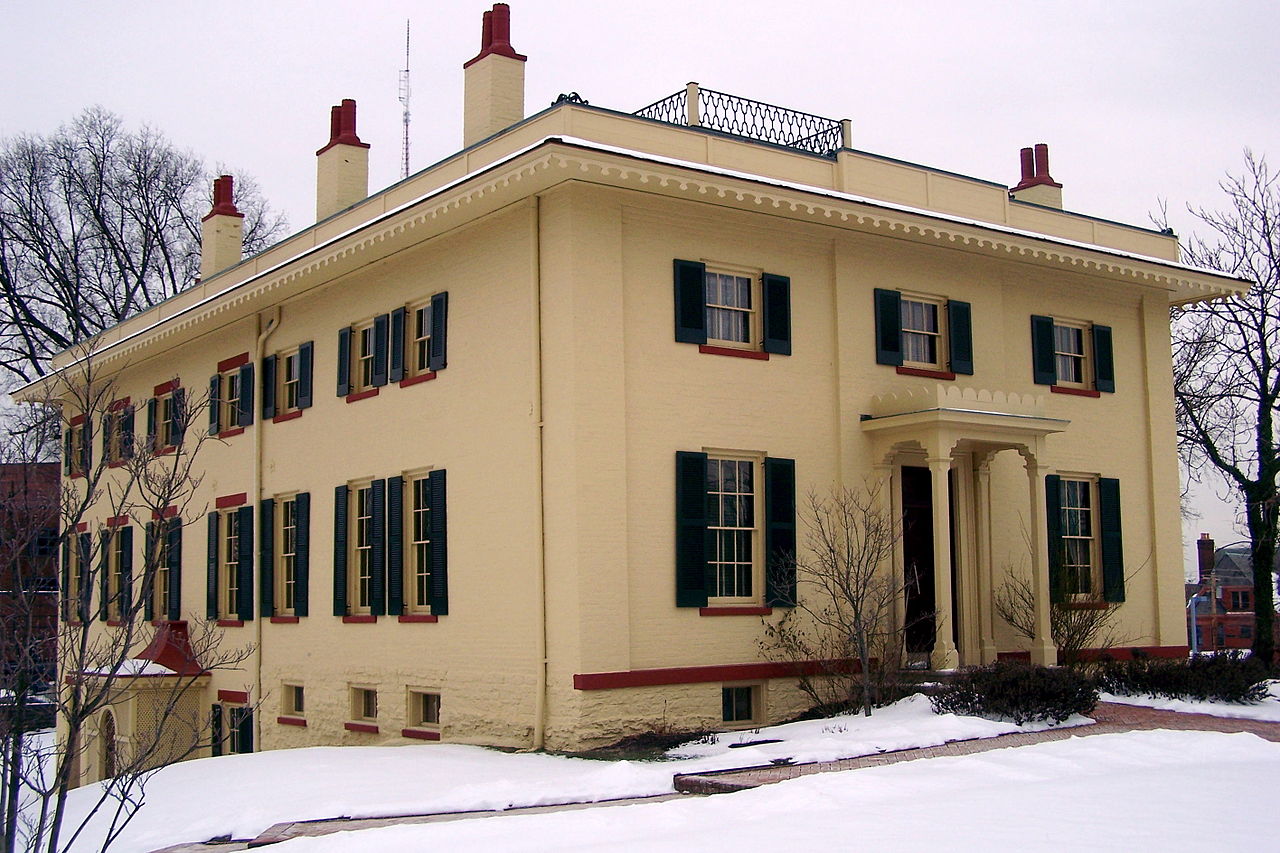
Built in the 1840s, William Howard Taft’s childhood home is a 6,000 square-foot, two-story brick house on a small, grassy plot of land atop Mount Auburn, overlooking downtown Cincinnati. No ideological or inappropriate content are in the video, tour, or exhibits.
As the only person to serve as both President and Chief Justice of the U.S. Supreme Court, William Howard Taft was a staunch defender of a strong but limited federal government under the Constitution. In a turbulent age of industrialization, he attempted to honor the Constitution in the spirit of his heroes, Alexander Hamilton and John Marshall.
As President (1909–1913), Taft attempted “to complete and perfect” the progressive policies of his predecessor and one-time friend, Theodore Roosevelt, by putting them on firmer constitutional ground. But Taft drew Roosevelt’s anger because Taft’s attempt to make Roosevelt’s policies “permanent in the form of law” subtly critiqued Roosevelt’s swashbuckling but unconstitutional use of presidential power. In the watershed election of 1912—“the first primary contest in American presidential politics”—they split the Republican vote and paved the way for the landslide victory of Woodrow Wilson. For Taft, the contest was about nothing less than the meaning of the Constitution itself. Roosevelt championed “pure democracy” and what has become known as the “stewardship theory” of executive power, according to which the President has the power to do anything he deems necessary unless it is specifically prohibited by the Constitution. In response, Taft argued that representative government can filter popular passions and promote deliberation—and that the President’s authority must be “fairly and reasonably traced” to the text of the Constitution. “The thing which impresses me most is not the power I have to exercise” as President Taft wrote, “but the limits the Constitution places on my power.”
Throughout his tenure as Chief Justice of the Supreme Court (1921–1930), Taft wrote more than 1,500 opinions, none “so important in its effect,” he later reflected, as his decision in Myers v. United States (1926). Carefully reviewing the text and original public meaning of Article II of the Constitution, Chief Justice Taft wrote that the President is head of the executive branch and therefore must have the authority to remove subordinate, executive officers from their positions. Without this “removal power,” the President could not “discharge his own constitutional duty of seeing that the laws be faithfully executed.” While the Supreme Court subsequently limited the President’s removal power somewhat, Myers v. United States has nonetheless preserved the American people’s (albeit indirect) control over the administrative state, making executive-branch officers accountable to the President, who is accountable to the people.
Owned By: The National Park Service
Operated By: The National Park Service
Government Funded: Yes
Did you know?
William Howard Taft is the only American to serve as both President and Chief Justice of the Supreme Court of the United States.
Recommended Reading
- President Taft Is Stuck in the Bath by Mac Barbett
- William Howard Taft by PragerU
- On the Source of Executive Power by Theodore Roosevelt and William Howard Taft
- William Howard Taft by Jeffrey Rosen
- William Howard Taft’s Constitutional Progressivism by Kevin Burns
Reviewed By
Joseph Griffith
William Blackstone Professor of Law & Society in the Ashbrook Center at Ashland University
The opinions expressed above are those of the Reviewer who is providing a good-faith historical assessment to educate the public. Reasonable opinions can vary, and the Reviewer’s opinion is not necessarily the opinion of The Heritage Foundation or its affiliates.