Morristown National Historical Park
Headquarters of George Washington from 1779–1780, where the Continental Army spent its coldest winter during the Revolutionary War
Site Details
Pin location is approximate.
30 Washington Pl
Morristown, NJ 07960
Family Friendly?
Yes
Visitors Per Year
225,000
There are several components to Morristown: the Museum, the Ford Mansion (where Washington and his troops were quartered), Jockey Hollow, and Fort Nonsense. The Museum and Mansion are close to one another, while Jockey Hollow and Fort Nonsense are within driving distance (15 minutes).
The Museum. Visitors are immediately greeted by a bust of Washington, which suggests an appropriate level of reverence for America’s first President, and a portrait of the Marquis de Lafayette. A brief movie describes the suffering of the men during the winter in a straightforward manner.
The museum is quite extensive. The first wing of the building contains an array of everyday items (a harpsichord, journals, cups, clothing, and the like) that might have been used during the time. The second wing includes field rifles, correspondence, portraits, the decorative sword Washington wore at his inauguration, and a British cannon that the Americans seized at Princeton. This section is thoughtfully laid out and provides opportunities for children to see great artifacts up close.
The third and final room is filled with an impressive collection of early prints of books, sermons, correspondence, and currency from Morristown and neighboring towns.
The basement contains enjoyable games and activities for children that teach them what camp life was like during the Revolution. There are two “activities” about slaves that involve true stories, but, given that slavery and race had almost nothing to do with the camp at Morristown as such, they seem somewhat out of place.
The Ford Mansion. The tour of the mansion, where Washington and some of his officers were quartered, takes about 20 minutes. Guides explain the reason Morristown was chosen as a base. It is close enough to New York City (where the British were), yet far enough removed from the British lines that the Americans would see an attack coming. It is also conveniently protected by the Watchung Mountains.
Although winters at Morristown were worse than at Valley Forge (one of the winters was the coldest on record), there were far fewer deaths because the Americans learned from their experience at Valley Forge and chose their campsite carefully.
There are not many items in the house, other than some beds and chairs, but visitors still get the experience of being in the same place as Washington and his officers.
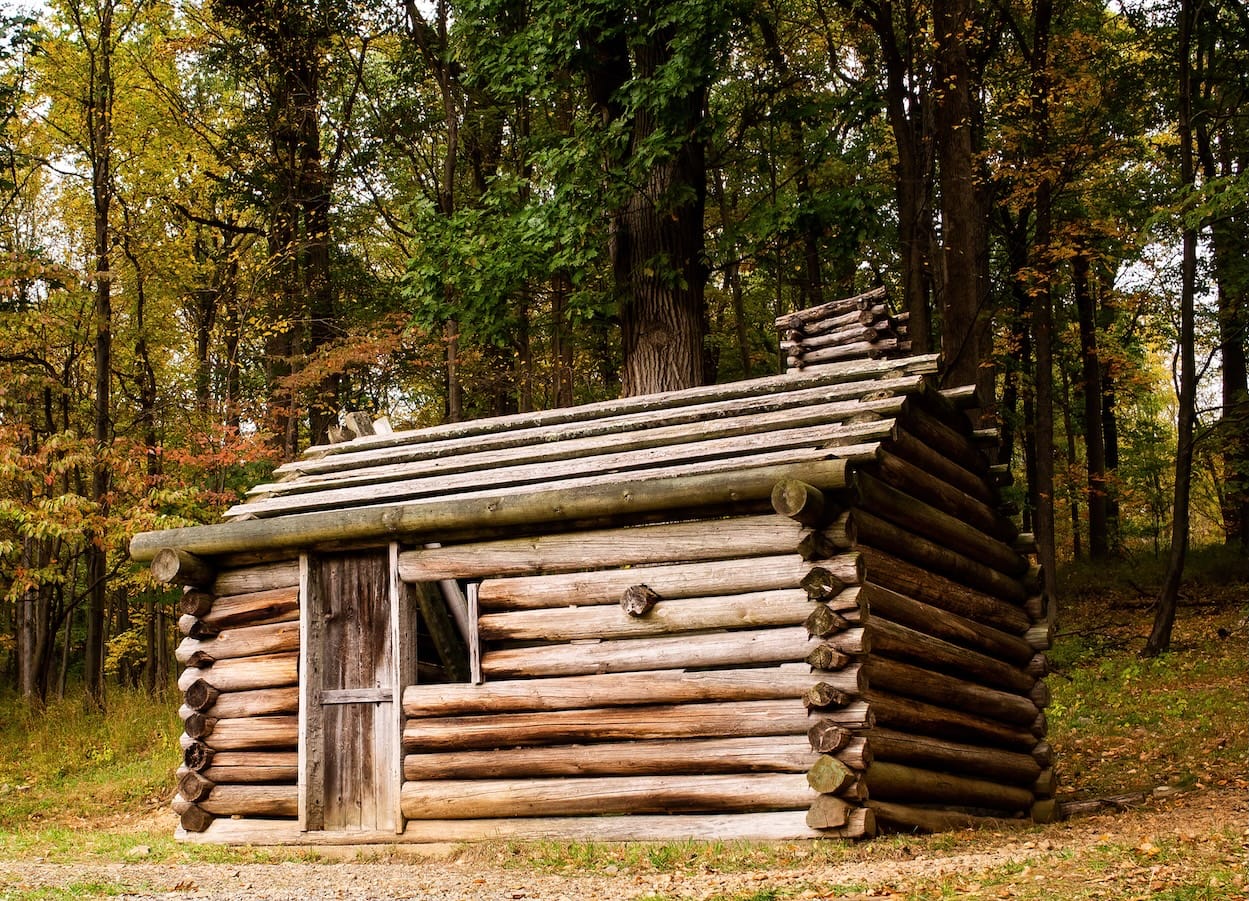
Jockey Hollow. Jockey Hollow is the place where the troops actually stayed during the winter of 1779. In the Visitors’ Center and on the grounds, there are replicas of soldier’s huts that contain blankets and clothing; they are great for children. Sometimes, there are employees dressed as soldiers reenacting camp life on the premises, which is exciting and interesting.
Just behind the gift shop is the Wick House and its garden, which belonged to the owner of the land upon which the Continental Army encamped. The house has been restored to look as it would have when one of the subordinate generals stayed there, and volunteers dressed in period attire give tours.
Fort Nonsense. Today, the site is generally a picnic and hiking area with a scenic view of New York City, but relatively little remains in terms of artifacts and history (remnants marked with stones on the ground and one cannon). If visitors are looking to shorten the visit for the sake of time, this would be the site to cut.
Overall, the park accurately and comprehensively depicted the sacrifice and struggle of the troops encamped at Morristown, while placing their stay in the context of the Revolution as a whole. There are many timelines to remind visitors of the time period in question, and tour guides are quick to note parallels with the encampment at Valley Forge.
There are a few instances of cherry-picking in the children’s section in the basement of the museum. For example, one exhibit describes Billy Lee, who is made known to the reader as someone Washington purchased as a slave, yet the exhibit omits that Washington freed Lee in his will. But on the whole, these instances are minor, and the museum is otherwise remarkably well conceived.
The curators of the museum have done an excellent job of exhibiting the treasures of the site with all appropriate respect and almost reverence for Washington and the troops. Nearly everything in the museum, the mansion, and at Jockey Hollow is depicted with a clear effort to merely show things as they were and honor the sacrifices made there, while displaying them in an appealing way.
The few examples of discordant notes arise from answering the charge of a lack of “minority representation,” as minority representation seems irrelevant to the specific history of the site.
Morristown National Historical Park is perfect for a day trip or if one finds oneself in the area.
Although there was no sensational battle to speak of at Morristown, the significance of the site is in the fact that so many were so willing to suffer grueling hardships for independence. Lest one doubt that, there were several attempts at mutiny, which suggests that conditions were indeed severe, especially during the winter of 1779–1780.
Washington himself spent quite a bit of time here. Much like Valley Forge, spending time in the Ford Mansion where Washington wintered can help Americans better relate to the later portion of the war. For example, it is easy to imagine many officers running about with reports from and to Washington.
During his stay, Washington was joined by his wife Martha, who arrived before the place received a record four feet of snow. Despite the size of the house, it must have been close quarters with Washington and his hosts all under one roof, especially given that they probably seldom left the house.
Owned By: National Park Service
Operated By: National Park Service
Government Funded: Yes
Did you know?
Although the winters at Morristown were colder than the winter at Valley Forge and the army was there longer, there were fewer deaths at Morristown than at Valley Forge, as the Continental Army had learned better techniques, such as camping at a higher elevation and keeping the latrine further removed from the camp.
Recommended Reading
- The Forgotten Victory: The Battle For New Jersey–1780 by Thomas Fleming
- Jockey Hollow: Where a Forgotten Army Persevered to Win America’s Freedom by Rosalie Lauerman
- Morristown: A Military Headquarters of the American Revolution by John W. Rae
Reviewed By
Graham Gormley
History teacher at Mainline Classical Academy
The opinions expressed above are those of the Reviewer who is providing a good-faith historical assessment to educate the public. Reasonable opinions can vary, and the Reviewer’s opinion is not necessarily the opinion of The Heritage Foundation or its affiliates.