Vicksburg National Military Park
Site of the 47-day siege that gave the Union control of the Mississippi River and split the Confederacy in two
Site Details
Pin location is approximate.
3201 Clay St
Vicksburg, MS 39183
Family Friendly?
Yes
Visitors Per Year
400,000
The Visitors’ Center contains a few small exhibits, a gift shop, and a theater where visitors can watch a 20-minute video on the Vicksburg campaign. A larger Visitors’ Center is expected to open in 2028.
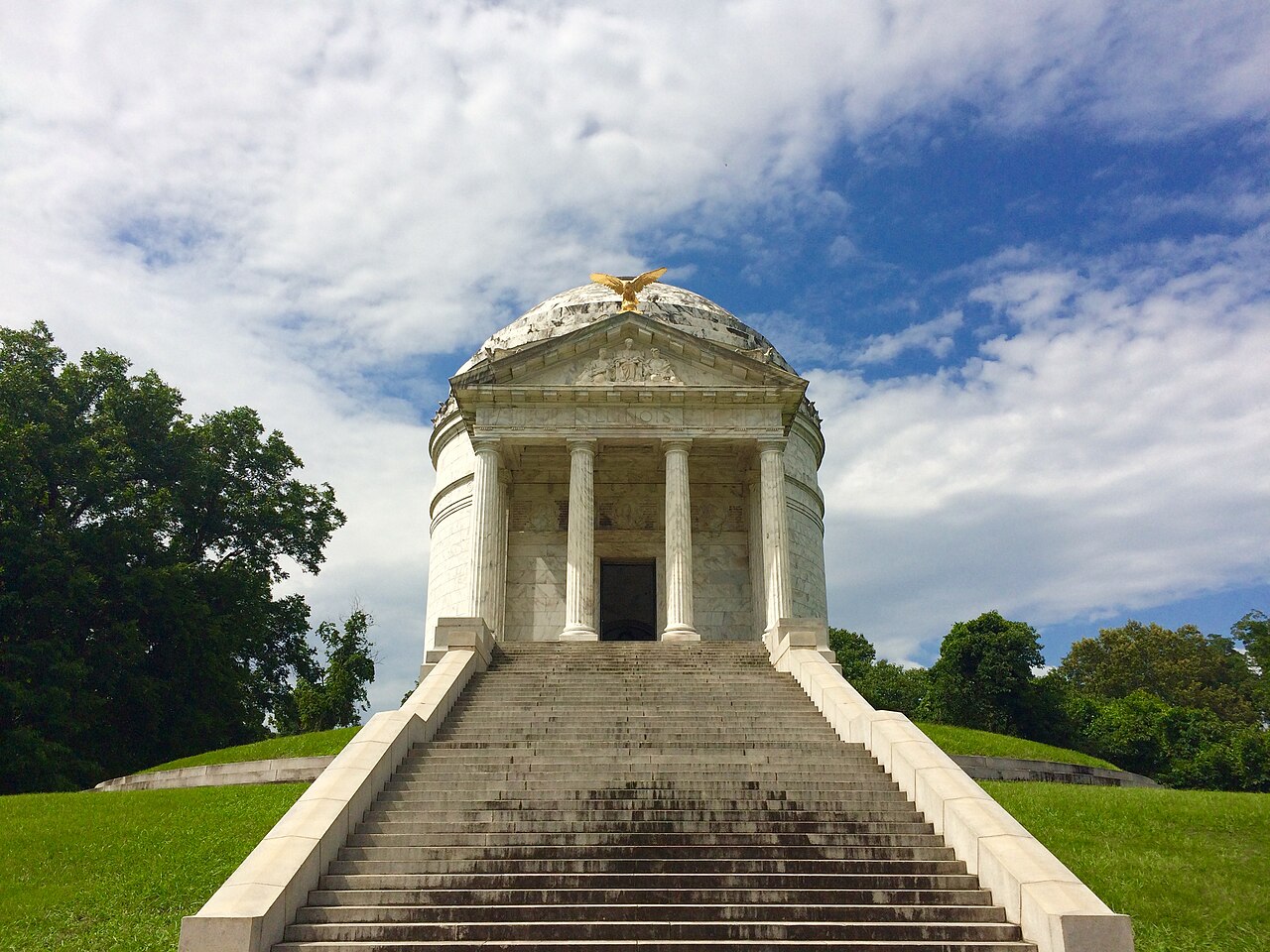
The park contains 16 miles of paved roads that take visitors to all the major sites. Several miles of road at the northern end of the park were closed in 2020 following torrential rainfall and remain under repair as of this review. An additional 12.5 miles of trail are available for hiking. Numerous monuments line the road, and 15 points of interest include signs and QR codes for further information.
The National Park Service app has a self-guided audio tour. In addition, the park offers certified guides who provide two-hour tours through the park. The exhibits, tours, brochures, and video concentrate on the fighting at Vicksburg from May 19–22, 1863, and the ensuing siege, which ended with the Confederate surrender on July 4. Some attention is also given to the broader Vicksburg campaign, which included unsuccessful Union efforts in 1861 and 1862 as well as the campaign launched in the spring of 1863 that involved fighting south and east of the city before culminating in the siege.
The Vicksburg National Cemetery, located on the park grounds, contains the remains of 17,000 Federal soldiers, most of whom were killed in the Vicksburg campaign. The Confederate dead are buried in Cedar Hill Cemetery, a short distance from the park.
The park also contains the Cairo Ironclad and Museum. A Confederate mine sank the USS Cairo in December 1862. It was removed from the river bottom in 1964 and reassembled for display in Vicksburg National Military Park in 1977. Next to the ironclad is a museum containing artifacts that were recovered from the ship.
The basic facts of the Vicksburg campaign have long been established and are not disputed by historians. The park generally avoids ongoing matters of historical controversy, with a few exceptions that are mentioned below.
- The park makes no attempts to link historical events to current political controversies or causes. Monuments and statues commemorating both Union and Confederate valor are spread throughout the park, and no efforts have been made to remove or devalue the Confederates monuments as has occurred elsewhere in the United States.
- Evidence of ideological bias and presentism—the evaluation of the past based on present-day attitudes without regard for historical context—can be found in the video shown at the Visitors’ Center and some of the brochures and online materials. Whereas the video includes the perspectives of several Union officers, those of Confederate officers are absent except for the comments of a Confederate commander about the courage of black troops at the Battle of Milliken’s Bend. Some of the exhibits and brochures also give greater attention to the Union cause than the Confederate cause. The disparity may suggest a general disdain for those who served in the Confederate cause, of the sort that surged during the Black Lives Matter protests and resulted in the removal or destruction of Confederate monuments and statues in some parts of the country.
- The audio tour avoids presentism and demonstrates the perils of blanket condemnations. It notes that most residents of Vicksburg owned slaves in 1861, yet a majority voted against secession. The senior Confederate commander, Lieutenant General John C. Pemberton, was born in the North and was not known to be a supporter of slavery; he sided with the South because his wife was from Virginia and he had spent much of his life in the South. Some Northern commanders, meanwhile, supported slavery. These facts help explain why General Ulysses S. Grant and many other Union officers did not share the view of American presentists that the Confederates were “deplorable traitors.”
- Park materials rightly emphasize the contribution of the Vicksburg campaign to the emancipation of the region’s slaves. The video and brochure give a very cursory depiction of the postwar Reconstruction period, in which emancipated blacks and white Republicans ably took charge of Vicksburg’s affairs, before the Compromise of 1877 returned white Democrats to power. The National Park Service website goes into more detail, asserting that racist “Euro-Americans” overturned Reconstruction by falsely accusing Reconstruction governments of incompetence and corruption. This interpretation supports the claim, popularized by the 1619 Project, that anti-black racism is the defining feature of the American nation. While racism was a factor in the overturning of Reconstruction, the actual history is much more complex. Radical Reconstruction, instituted by Congress in 1867, disregarded Abraham Lincoln’s vision of a generous peace. By barring former Confederates from political office, it ensured that most of the South’s most talented and resolute leaders would oppose the Reconstruction governments. Northern whites ultimately consented to the end of Reconstruction because they concluded that the Reconstruction governments were incompetent and corrupt. An accurate understanding of Reconstruction provides an important lesson: Good intentions can be thwarted by ill-conceived policies, heavy-handed governance, and insufficient personnel.
The military park is accessible by car, and most sites are suitable for strollers or wheelchairs, aside from a few with steps. Hiking trails are available for those who are interested, but the key sites can all be seen from the road or short walks from it. While the video contains some depictions of combat, they are not gory. Unlike some other Civil War battlefields, the park does not display panoramic photos of dead bodies. The indications of ideological bias are subtle enough and limited enough that they are unlikely to affect children.
The capture of Vicksburg was arguably the most important Union victory in the Civil War. For the first two years of the war, repeated Union efforts failed to dislodge the Confederates from this key redoubt on the Mississippi River. Jefferson Davis allocated substantial numbers of troops and a large cache of weapons to the defense of Vicksburg because he considered it “the nailhead that holds the South’s two halves together.”
In May 1863, General Grant surrounded Vicksburg with forces outnumbering the Confederates by more than two to one. The Confederate commander responsible for Vicksburg, Lieutenant General John C. Pemberton, attempted to strike a part of Grant’s army before it reached Vicksburg, but deficiencies in leadership and military intelligence led to several major defeats, compelling Pemberton to retreat to the fortress. When Grant attacked Vicksburg on May 19 and May 22, 1863, the entrenched Confederates repulsed his forces. Turning to siege warfare, Grant exploited superior land and naval forces to isolate the Confederates until early July, at which point the lack of food compelled the Confederates to surrender.
Union forces captured 30,000 Confederate soldiers along with nearly 200 artillery pieces and 60,000 muskets and rifles. The fall of Vicksburg severed the last remaining point on the Mississippi where the western Confederate states could transport goods and supplies to the rest of the Confederacy, and it secured Union control of the entirety of the Mississippi River. Union forces freed the slaves of Vicksburg and surrounding areas and enlisted them in the defense of the city.
As the park makes clear, both sides demonstrated considerable ingenuity, perseverance, and courage in the face of adversity. The campaign’s history offers important leadership lessons, highlighting how good and poor decisions spelled the difference between life and death. Visitors are likely to come away with respect for the soldiers and civilians who endured great hardships and injuries.
Owned By: The National Park Service
Operated By: The National Park Service
Government Funded: Yes
Did you know?
The Union and Confederate commanders at Vicksburg had served together in the Mexican War.
Recommended Reading
- Vicksburg 1863 by Winston Groom
- Vicksburg: Grant’s Campaign That Broke the Confederacy by Donald L. Miller
Reviewed By
Dr. Mark Moyar
William P. Harris Chair of Military History at Hillsdale College
The opinions expressed above are those of the Reviewer who is providing a good-faith historical assessment to educate the public. Reasonable opinions can vary, and the Reviewer’s opinion is not necessarily the opinion of The Heritage Foundation or its affiliates.