Ulysses S. Grant National Historic Site
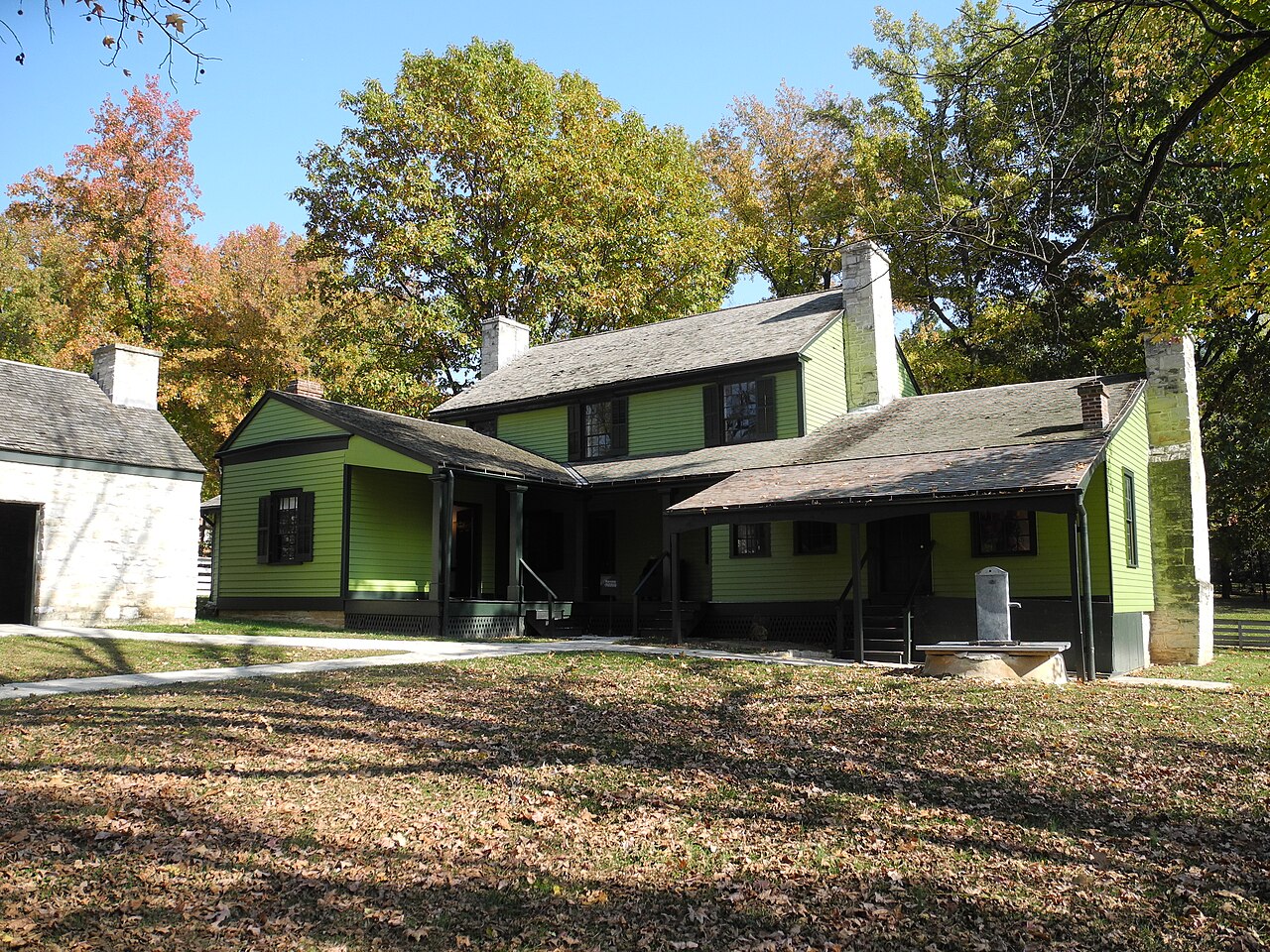
Home where the victorious commander of the Union troops met his wife, Julia Dent, and where they lived for several years before his rise from obscurity to the presidency
Site Details
Pin location is approximate.
7400 Grant Rd
St. Louis, MO 63123
Family Friendly?
Yes
Visitors Per Year
32,000-45,000
The site consists of part of the White Haven estate and includes several surviving buildings from Grant’s time. Park rangers provide a 10-minute introduction at the top of every hour between 10 a.m. and 4 p.m., after which visitors take a self-guided tour of the main house with a ranger nearby to answer questions. Exhibits in the house give a glimpse of the daily lives of the house’s occupants and the topics gripping the nation at the time Grant lived there. Room-by-room guided tours are by request. Tours typically last 30 to 40 minutes. Tours with special themes, such as the relationships between various family members or slavery at White Haven, are offered during the summer.
The park’s horse stable, which was added by President Grant, was rehabilitated in recent years and serves as the site’s museum. As described by the National Park Service, “The museum has six different permanent galleries that are guided by two different themes. One focuses on Ulysses S. Grant in his personal life; his relationship with his family, his marriage, his role as a father to four children, his experiences as a St. Louis farmer, and his tour around the world with his wife Julia. The second theme focuses on Grant’s public service as a general and president.”
The museum offers the most extensive presentation of Grant’s personal and public life to be found among Grant’s preserved former homes. Several exhibits highlight Grant’s relationship with his wife, the stories of their four children, interactions with Grant’s parents and in-laws, the Dent family, and the challenges of farming during that era. Extensive narrative exhibits with timelines cover Grant’s generalship and presidency.
Grant’s groundbreaking work as President in defense of citizenship and racial equality (for example, his fight against the Ku Klux Klan) receives much overdue recognition in the museum. The main orientation film shown to visitors, Ulysses S. Grant: A Legacy of Freedom, illustrates the remarkable trajectory of that legacy from his St. Louis years to the White House. The museum’s collection of artifacts includes General Grant’s three-star shoulder strap and shaving mirror, the Grants’ 25th wedding anniversary coffee set, an Indian peace medal featuring President Grant, presidential campaign items, and a first edition copy of Grant’s memoirs.
Visitors can also explore other surviving structures on the estate grounds from the period—a summer kitchen, ice house, and chicken house.
The museum’s exhibits adeptly address some of the most common questions raised by traditional historical accounts of Grant with evidence from the historical record. One interactive exhibit takes on the question of whether Grant was a failure during his St. Louis years or at other times in his life by challenging visitors to assess their own valuation of personal integrity, financial reward, leadership skills, and handling of fame. Other exhibits dispel myths from Grant’s generalship and White House years, bringing out his patriotism, work ethic, and integrity in the process.
Park rangers on staff have developed an expertise on Grant’s St. Louis years, including the wedding of Grant to Julia Dent and the experiences of the Dent family and the enslaved people at White Haven. The interpretive staff uncovers information not found in previously published histories. The rangers have been so diligent in their research that they have become a virtually essential resource for Grant biographers and other historians of the period.
The topics emphasized at the site are naturally relevant to understanding both Grant’s personal story and his public career—and, in turn, the issues that absorbed the nation from the years before the Civil War through Reconstruction. The staff employs careful methodology in developing the site’s presentations. They do so without falling prey to tendentious analysis or ideological bias, sticking to available information and retaining historical perspective.
Any site that explores issues of war and slavery naturally presents special considerations for small children, but the site is nonetheless family-friendly. Visitors of all ages can appreciate the exploration, in tours and exhibits that include numerous artifacts, of Grant’s family life. Children may use a Junior Ranger Program activity book during their visit and earn a Junior Ranger badge when they complete activities from the book. School field trips may supplement the house tour with 19th-century games or a living history program. The grounds are attractive and conducive to walks during which visitors encounter several features of 19th-century farm life. Also of particular value to visitors of all ages, the museum highlights the meaning of citizenship as distinctively shaped by Grant’s legacy.
White Haven was an 850-acre plantation in St. Louis County, and it included a home in which Julia Dent had lived with her family since childhood. There, Ulysses S. Grant met and courted her in 1844, at a time when he was stationed at nearby Jefferson Barracks. Following the Mexican War, in which Ulysses fought, the two were married in the Dent city home in St. Louis in 1848. Ulysses spent several years with the peacetime army before resigning in 1854 and joining his family to live and farm at White Haven. The Grant family lived in several locations on the estate until 1859, two years before the start of the Civil War and Ulysses’ return to the army. During the war, he rose to be the supreme commander of the Union armies. After the war, he purchased the White Haven estate from his father-in-law and made improvements to the property. He served as the nation’s 18th President from 1869 to 1877, during which time he made several visits to White Haven.
Over the course of his Civil War battles and campaigns, including at Forts Henry and Donelson, Shiloh, Vicksburg, Chattanooga, the Wilderness Campaign, the Petersburg Campaign, and the Appomattox Campaign, General Grant was the principal author of Union victory. He is often considered one of the first modern generals, and his innovative strategy brought the decisive victory that had eluded half a dozen commanders in the eastern theater of the war before him. His military victories also enabled the emancipation of enslaved people. After the war, General Grant oversaw military Reconstruction and supported civil rights measures. As President, he secured the ratification of the Fifteenth Amendment, which prohibits racial discrimination in voting; secured groundbreaking laws for the protection of equal rights; and crushed the 19th-century Ku Klux Klan. He resolved disputes with Spain and Great Britain that threatened war, setting an important precedent for international peace in the process. His economic policy addressed serious fiscal and monetary challenges and laid the groundwork for future prosperity. During his two-and-a-half-year trip around the world, former President Grant established a model of public diplomacy for future presidents. His Personal Memoirs of U.S. Grant stands as one of the greatest works of American literature.
White Haven was designated a national historic site in 1989, and the site underwent major renovations during the 1990s and 2000s. Archaeological surveys at the site are ongoing. They have already yielded several thousand artifacts and identified the locations of a number of buildings on the plantation.
Visitors should also consider visiting Grant’s Farm, a family attraction adjacent to the park, which includes land where the Grant family lived and where “Hardscrabble,” a cabin built by Grant, now stands (following a move from its original location).
Owned By: National Park Service
Operated By: National Park Service
Government Funded: Yes
Did you know?
In 1859, Ulysses S. Grant emancipated the only slave he is known to have acquired from his father-in-law, despite his precarious financial condition.
Recommended Reading
- Personal Memoirs of U.S. Grant by Ulysses S. Grant
- Ulysses. Grant: Triumph Over Adversity, 1822–1865 by Brooks D. Simpson
- The Presidency of Ulysses S. Grant by Charles W. Calhoun
Reviewed By
Frank J. Scaturro
President of the Grant Monument Association, author of President Grant Reconsidered (University Press of America, 1998) and The Supreme Court’s Retreat from Reconstruction (Greenwood Press, 2000), and co-editor of Grant at 200 (Savas Beatie, 2023)
The opinions expressed above are those of the Reviewer who is providing a good-faith historical assessment to educate the public. Reasonable opinions can vary, and the Reviewer’s opinion is not necessarily the opinion of The Heritage Foundation or its affiliates.