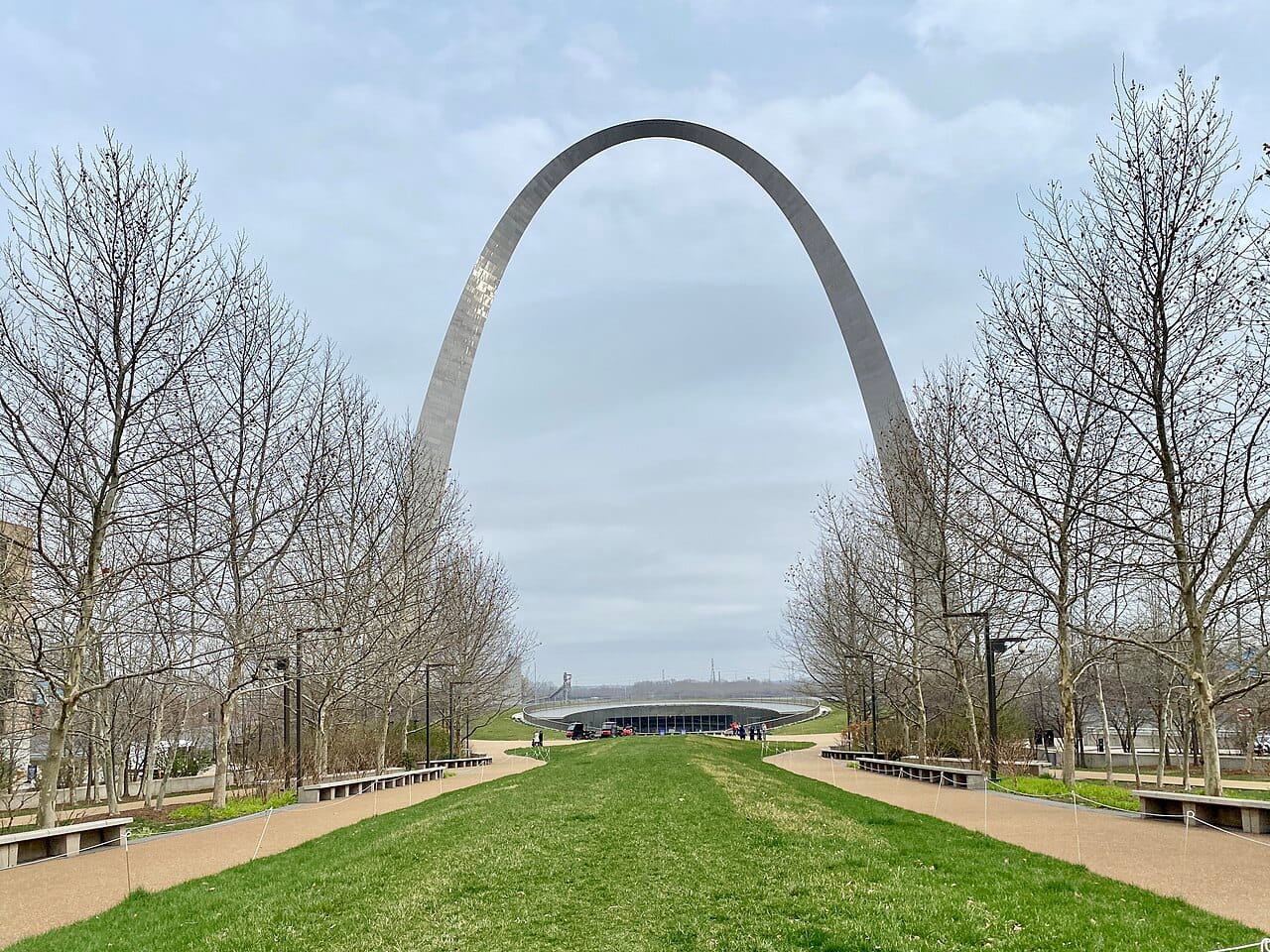
Gateway Arch National Park
Monument and museum that commemorate westward expansion of the United States from the Mississippi River
Site Details
Pin location is approximate.
11 North 4th Street
St. Louis, MO 63102
Family Friendly?
Yes
Visitors Per Year
2,563,000
Visitors to the Gateway Arch National Park can learn about both the Arch and westward expansion through several different elements of the park.
The highlight is, undoubtedly, riding the tram system to the top of the Arch for striking views of the Mississippi River, Illinois, and Missouri.
Visitors can view the film Monument to the Dream, which documents the Arch’s construction from 1963–1965. The film communicates the courage and skill of the architects, engineers, and construction workers who built the Arch.
At the base of the Arch is the park museum. The current version of the museum opened in 2018, replacing an earlier layout. The museum is broken up into six sections that cover St. Louis, westward expansion, and the Arch itself. As a skillful and engaging presentation, the museum succeeds. It uses artifacts, models, and displays well. Explanatory text is everywhere present but not overwhelming. The digital displays are often helpful, and the interactive stations are engaging. At the same time, the new design has clearly reduced coverage of some elements of westward expansion. Lewis and Clark’s expedition, while present, receives less attention, and the other expeditions of discovery and settlement are mentioned but do not receive much attention. The drama of westward movement—especially for the mining, ranching, and farming frontiers—is largely skirted over.
Visitors can explore all three elements on their own, but Ranger tours are available for the museum and at the top of the Arch. Rangers are friendly and engaging and present significant information about the site, and each Ranger can personalize how he or she will make the presentation to a group.
The presentation in the museum is all factually accurate, but the question remains regarding what to prioritize. In some ways, the exhibit follows more recent scholarly trends of emphasizing local history and the “New Western History,” with a focus on conflict and disappointment in the West. These aspects should be balanced by the national developments represented by westward expansion. Many settlers brought hopes and aspirations and found much good in their pioneering efforts and the communities they formed.
The section on the West after the Civil War was the least developed, and the exhibit could do a better job of elaborating on the varied endeavors to settle throughout the West.
The section of the museum devoted to the westward movement in the decades before the Civil War was described as “Manifest Destiny.” This section highlighted the contest for control of the land. It left one visitor musing, “I guess it was complicated.” The period and developments were complicated, but many settlers were also motivated by honorable goals of improvement for themselves and their families, an important component the presentation missed.
The park is highly recommended for families. The trams to the top of the Arch are tight, but they lead to a memorable experience. The film Monument to the Dream can be inspiring in its own right. The museum as a whole is engaging and can teach children quite a bit, even though parents may want to supplement additional stories of settlement on the prairies or in the Rocky Mountain west. The green space around the Arch is prime territory for exploring and viewing the Mississippi River.
The Gateway Arch commemorates the nation’s push westward in the 19th century—a movement full of drama, the same drama captured by the graceful yet audacious Arch itself. That westward expansion left a permanent mark on American life and the nation’s self-conception. Following Thomas Jefferson’s Louisiana Purchase and exploration by figures like Lewis and Clark and Zebulon Pike, Americans moved westward in hopes of bettering themselves and their families. Through struggle and sacrifice, Americans pushed frontiers forward, until by the end of the century, the country’s settlement stretched “from sea to shining sea.”
Another element of the greater park complex is the Old Courthouse in St. Louis. It contains an exhibit about Dred Scott and the Supreme Court case that bears his name.
Owned By: The National Park Service
Operated By: The National Park Service
Government Funded: Yes
Did you know?
As the tallest human-built monument in the United States, the Gateway Arch rises 630 feet above the ground.
Recommended Reading
- To the Top! A Gateway Arch Story by Amanda Doyle
- The Gateway Arch: Celebrating Western Expansion by Joanne Mattern
- The Making of an Icon: The Dreamers, The Schemers, and the Hard Hats who Built the Gateway Arch by Jim Merkel
Reviewed By
Jonathan Den Hartog
Professor and Chair of the Department of History at Samford University
The opinions expressed above are those of the Reviewer who is providing a good-faith historical assessment to educate the public. Reasonable opinions can vary, and the Reviewer’s opinion is not necessarily the opinion of The Heritage Foundation or its affiliates.